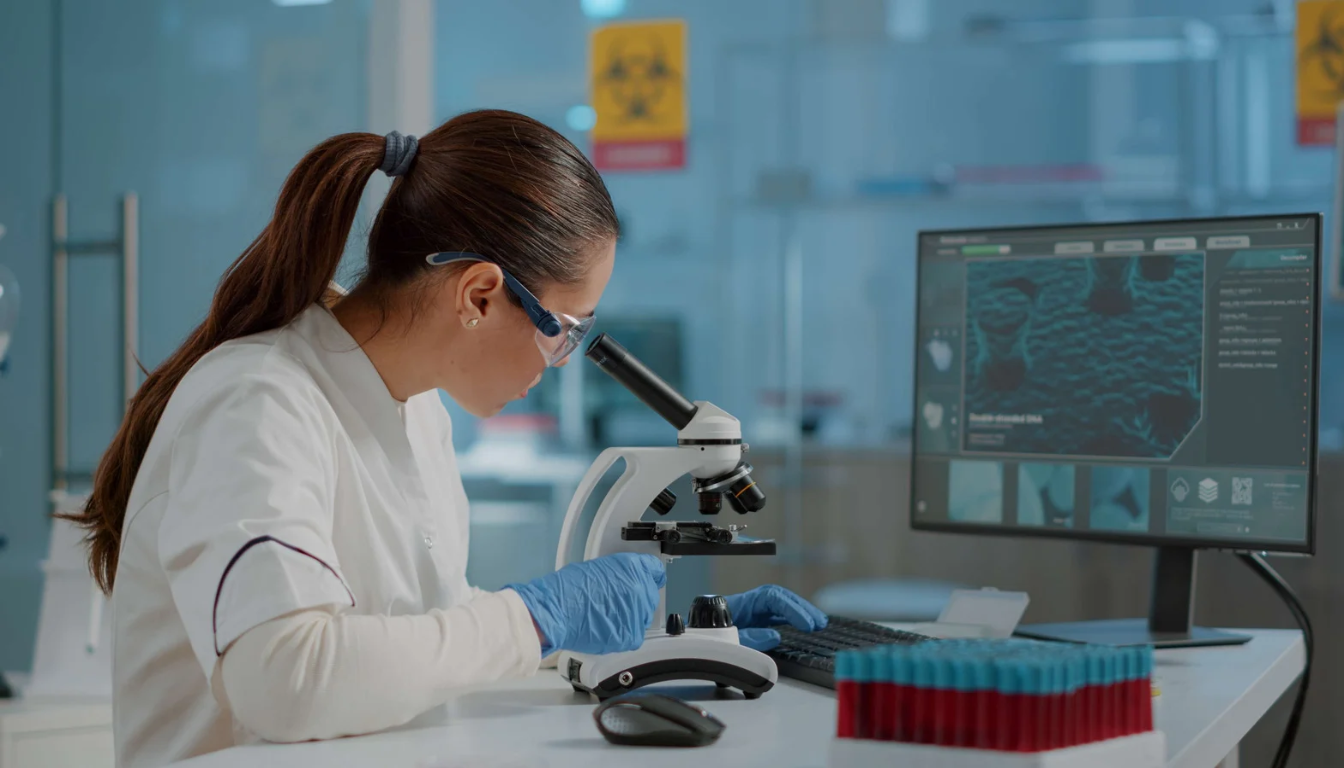


Some of the most consequential work in materials science begins with properties that are difficult to explain outside a laboratory. Researchers study conductivity, thermal behavior, surface chemistry, and structures measured at scales far removed from the products most people use. The commercial challenge begins when someone has to determine whether those properties can solve a practical problem and whether the solution can be manufactured, tested, and incorporated into an existing industry.
That distance between scientific discovery and commercial use is where Mario Alonso and Dr. Babak Anasori have built their working relationship at MN8 Innovative Solutions.
Alonso, MN8’s founder and CEO, comes from a career in company building and capital allocation across mobility, financial services, real estate, and specialty credit. Anasori, the company’s chief science officer, is an associate professor of materials engineering at Purdue University whose academic work has focused on advanced materials and, in particular, a class of two-dimensional materials.
Their backgrounds create a useful division of responsibility. Anasori studies what materials can be engineered to do and how their properties can be characterized. Alonso focuses on the industries where those capabilities may have commercial value and the operating structure required to bring them into products.
The relationship matters because advanced materials rarely reach large markets through scientific merit alone. A material can perform exceptionally under controlled conditions and still face years of difficult work before a manufacturer can use it. Production methods have to be repeatable, costs have to make sense, and the technology must fit into manufacturing systems that companies are often reluctant to disrupt.
Alonso has approached MN8 with those constraints in mind. The company is building a business-to-business materials platform that develops functional technologies for integration into products made by established brands. Its initial work centers on far-infrared bioceramics that can be incorporated into textiles and other materials, with applications in areas including apparel, bedding, recovery products, and insoles.
The commercial model places MN8 behind the finished product. An apparel company, for example, does not need to become a materials-science organization to experiment with functional textiles. MN8’s role is to develop and characterize the underlying technology, then create a pathway for a manufacturing partner to incorporate it.
For Anasori, the work involves a different set of questions from those that typically define academic research. Scientific inquiry can begin with the properties of a material and follow the most promising questions that emerge. Commercial development usually starts with a problem, then works backward through performance requirements, manufacturing limitations, and cost.
Alonso sees value in keeping those perspectives close to each other. The scientist shouldn’t have to become the salesperson, and the operator shouldn’t pretend to be the scientist. The work gets interesting when both sides understand enough about the other’s problem to build something together.
That is becoming increasingly relevant as companies search for materials that can add function to otherwise familiar products. Apparel brands have spent decades competing through design, fit, price, and branding, while bedding and footwear companies have followed similarly established product cycles. Materials science gives these industries another potential area of differentiation, although accessing it requires expertise that sits far outside their traditional operations.
MN8’s scientific work extends beyond its current bioceramic platform. The company is also exploring next-generation materials.
Anasori has been closely involved in the development of the field through his academic research. At MN8, the longer-term question is how expertise in advanced materials can be organized around practical applications in health, consumer products, and other industries.
The process requires restraint because the gap between a promising material and a viable product can be substantial. Materials companies have to establish what a technology can reliably do before deciding how broadly to describe its potential. That issue becomes especially important when products are connected to health, recovery, or biological function, where scientific language can quickly move ahead of supporting evidence.
MN8 has placed research and validation near the center of its development strategy. The company is also building a patent portfolio around its materials technologies and potential applications.
For Alonso, these investments are part of the infrastructure required to build a durable materials business. His earlier career involved industries where the visible transaction depended on systems operating beneath it, whether underwriting in financial services or technology coordinating a mobility network. Advanced materials presents a similar structural problem because the consumer product is only the final expression of years of research, testing, and manufacturing work.
Anasori’s role is to keep that infrastructure connected to the science. Alonso’s is to determine where the science can support a business large enough to justify the effort required to commercialize it.
Their partnership offers a useful model for an area of technology that often struggles with translation. Universities and research laboratories are designed to advance knowledge, while consumer and industrial companies are designed to make and sell products. The space between them requires people who can work across different timelines, incentives, and definitions of progress.
MN8 is being built in that space. Its prospects will depend on whether the company can turn advanced materials into technologies manufacturers can adopt and customers can ultimately benefit from, a challenge that neither scientific expertise nor operating experience can solve independently.