

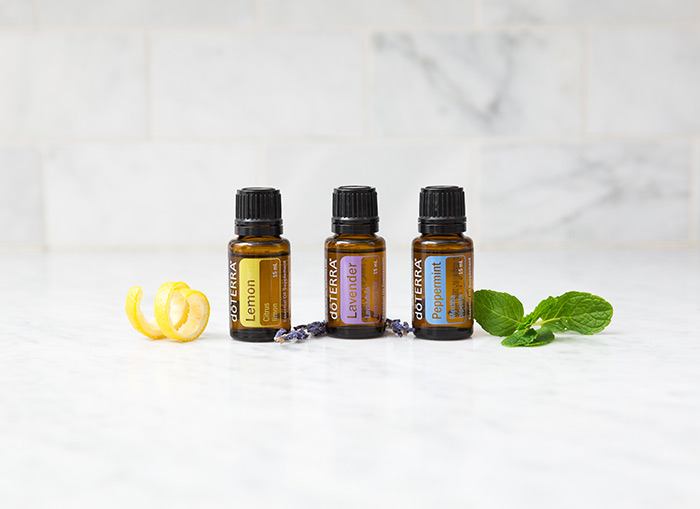
Lavender essential oil contains many distinct chemical compounds. A synthetic “lavender” fragrance oil might contain a similar number of chemicals, but nearly all of them were designed in a laboratory and assembled to replicate an aroma rather than preserve the plant’s original molecular profile. That gap between a plant-derived oil and its synthetic counterpart sits at the center of a consumer market projected to reach $49 billion by 2033, and it carries real consequences for anyone using aromatic products for wellness, personal care, or household purposes.
A recent educational analysis published by doTERRA, one of the largest essential oil companies in the world, breaks down the chemical, regulatory, and safety differences between essential oils and fragrance oils in great detail. Written by Dr. Nicole Stevens, doTERRA’s vice president of clinical research, the article offers a window into how industry leaders are working to help consumers navigate a crowded and often confusing market. It also raises broader questions about supply chain transparency, testing protocols, and what “natural” actually means when it appears on a product label.
Two Products, Two Origin Stories
Essential oils and fragrance oils both produce scent. Beyond that shared trait, their origins diverge completely.
The International Organization for Standardization (ISO) defines essential oils as products obtained from natural raw materials through physical processes, including steam distillation and mechanical expression. The U.S. Food and Drug Administration (FDA) does not maintain a formal regulatory definition but recognizes essential oils as substances extracted from plants that contain volatile aromatic compounds.
Fragrance oils, on the other hand, consist of aromatic compounds created primarily through chemical synthesis. Industry estimates cited in doTERRA’s analysis indicate that 60 to 70 percent of fragrance industry raw materials originate from petrochemical feedstocks, including benzene, toluene, and xylene derivatives. Perfumers World, a fragrance industry supplier, places that figure even higher, noting that approximately 95 percent of chemicals used in synthetic fragrances come from petroleum sources.
That distinction matters because the chemical complexity of plant-derived oils is difficult, and sometimes impossible, to recreate synthetically. Lavender essential oil, for example, contains linalool at concentrations between 20 and 45 percent, linalyl acetate between 25 and 47 percent, and dozens of minor constituents including terpinen-4-ol, lavandulyl acetate, and various sesquiterpenes. Each of these compounds exists in specific ratios determined by the plant’s genetics, growing conditions, and distillation parameters.
A synthetic lavender fragrance oil might contain phenyl ethyl alcohol, citronellol, geraniol, and other lab-created molecules calibrated to mimic the scent of real lavender. The result often smells convincing. But it lacks the complete chemical profile that defines the essential oil, and that difference has implications for anyone interested in aromatherapy or topical wellness applications.
How Extraction Methods Shape the Final Product
Three primary methods dominate essential oil production, and each one determines which compounds make it into the bottle.
Steam distillation accounts for the majority of essential oil production worldwide. Pressurized steam passes through plant material at temperatures typically ranging from 140 to 212 degrees Fahrenheit, rupturing the plant structures that hold volatile compounds. Those compounds vaporize, travel through a condenser, and separate into essential oil and hydrosol. Temperature control during this process is exacting. Lavender distillation requires temperatures below 245 degrees Fahrenheit and pressure under 3 psi to preserve beneficial compounds, according to doTERRA’s analysis.
Cold expression, used exclusively for citrus oils, involves piercing the oil glands in fruit peels mechanically. Because no heat is applied, the method preserves heat-sensitive compounds like furanocoumarins. Commercial operations use centrifugation to separate the essential oil from juice and cellular material.
CO2 extraction operates at temperatures between 95 and 100 degrees Fahrenheit, well below steam distillation thresholds. Under specific pressure conditions, carbon dioxide enters a supercritical state, exhibiting properties of both liquid and gas. That physical behavior allows the extraction of both volatile and heavier molecular weight compounds that would be lost during traditional distillation.
Fragrance oil production follows an entirely different set of pathways. Petrochemical synthesis uses petroleum fractions, including benzene and toluene, to produce aromatic compounds through chemical modification. Natural isolates offer a partial middle ground; linalool, for instance, can be isolated from rosewood oil or synthesized from pinene derived from turpentine. Biotechnology-based production, which uses engineered microorganisms to create specific aromatic compounds through fermentation, currently accounts for 5 to 10 percent of fragrance raw materials.
The Testing Problem
One of the most pressing challenges in the essential oil industry involves adulteration. Poor production practices and the proliferation of synthetic variations make it difficult for consumers to identify a genuinely plant-derived oil without laboratory analysis.
Gas Chromatography-Mass Spectrometry (GCMS) serves as the baseline analytical tool for essential oil evaluation. The technique separates volatile compounds through gas chromatography, then identifies each component through mass spectrometry. A typical GCMS report identifies 20 to 50 or more individual compounds, provides percentage compositions, and compares results to ISO standards or published specifications.
GCMS testing can detect synthetic additions, like dihydrolinalool in linalool-rich oils, and flag phthalate contamination. But the technology has limitations. Unknown compounds in chemically complex oils such as vetiver may not match database entries. Sophisticated adulterations sometimes require additional techniques, including chiral analysis, Fourier-transform infrared spectroscopy (FTIR), and carbon isotope testing.
doTERRA developed its CPTG Certified Pure Tested Grade protocol specifically to address the absence of a universal industry standard for essential oil quality. The protocol includes eight distinct testing methods conducted at three separate stages of production: immediately after distillation, upon arrival at the company’s manufacturing facility, and during the bottling process. Each batch also undergoes third-party laboratory testing.
Regulation: What the Labels Don’t Tell You
The regulatory framework governing essential oils and fragrance oils in the United States leaves significant gaps that affect consumers.
Products intended solely to cleanse or enhance attractiveness fall under cosmetic regulations, and the FDA does not pre-approve cosmetic ingredients. The Federal Fair Packaging and Labeling Act of 1973 exempts fragrance ingredients from detailed disclosure, allowing companies to list simply “fragrance” on product labels rather than itemize individual chemical components. A product labeled “lavender scented” could contain entirely synthetic compounds, and the consumer would have no way of knowing without independent testing.
The International Fragrance Association (IFRA) establishes voluntary global standards for fragrance ingredient safety. The 51st Amendment includes regulations for more than 180 restricted substances, categorized across 12 product application types with specific concentration limits for potentially sensitizing ingredients. Compliance requires fragrance manufacturers to limit restricted materials, prohibit certain substances entirely, and maintain purity specifications.
For essential oils used in aromatherapy or wellness contexts, the FDA’s approach depends entirely on intended use. Products marketed with health claims fall under different regulatory requirements than those sold as cosmetics. That regulatory ambiguity puts additional weight on company-level quality controls and consumer education, two areas where doTERRA has invested heavily.
A $2 Billion Bet on Quality and Education
doTERRA’s interest in publishing detailed educational content like the fragrance oil comparison reflects a broader company philosophy that ties product quality directly to consumer knowledge. The Pleasant Grove, Utah-based company surpassed $2 billion in annual sales in 2024 while reaching more than 10 million customers worldwide, milestones attributed in part to education-focused initiatives.
The company’s supply chain structure undergirds doTERRA’s testing regime. Because doTERRA works directly with farmers and distillers, it maintains oversight from cultivation through distillation, something that would be far more difficult through a conventional broker-mediated supply chain. The company sources more than 140 essential oils from 45 countries, with a particular focus on developing nations where traditional agricultural knowledge often produces optimal plant material.
doTERRA’s educational resources extend well beyond blog articles. The company operates a dedicated training platform with courses covering product knowledge, essential oil usage protocols, safety guidelines, and compliance. It’s 3 million+ Wellness Advocates, the independent representatives who sell and distribute doTERRA products, receive structured onboarding that includes product education.
Dr. Stevens, the author of the fragrance oil comparison article, brings over 25 years of experience in essential oil research to doTERRA’s educational efforts. Her academic background includes a doctorate in biochemistry and molecular biology from the University of Miami Miller School of Medicine, where she investigated essential oil metabolomics and mechanisms of action. That kind of credentialed expertise behind consumer-facing content distinguishes doTERRA’s approach from companies that rely primarily on marketing copy.
Safety: Natural Does Not Mean Risk-Free
Both essential oils and fragrance oils require informed handling, and doTERRA’s educational emphasis reflects that reality.
Many essential oils contain compounds that can cause irritation or sensitization if used improperly. Citrus oils contain furanocoumarins that cause photosensitivity. Oils high in phenols or aldehydes may irritate skin at full concentration. Proper dilution and adherence to usage guidelines remain necessary regardless of product quality.
Fragrance oils carry their own set of concerns. Research published in the Journal of Environmental Health found that fragranced products emitted an average of 17 volatile organic compounds (VOCs), with potential effects including headaches and respiratory difficulties. The inability of consumers to identify specific ingredients in synthetic fragrance formulations, thanks to the “fragrance” labeling exemption, compounds the challenge.
doTERRA addresses safety through multiple channels: product information pages that specify dilution ratios and sensitivity levels, blog content covering safe usage practices, and a dedicated resource section on essential oil safety on its website.
Sustainability and Community Impact
Production of plant-based essential oils requires substantial agricultural resources. Producing one pound of rose essential oil demands approximately 10,000 pounds of rose petals. Those numbers create real pressure on sourcing communities, particularly in developing countries where essential oil crops represent a significant portion of local economic activity.
doTERRA’s Co-Impact Sourcing program, launched in 2016, aims to address those pressures through direct partnerships with growers. The initiative had created more than 122,000 jobs by 2018, according to company figures. In 2024, the doTERRA Healing Hands Foundation donated more than $3 million, supporting initiatives in 14 countries that delivered clean water infrastructure in Nepal, educational facilities in Ghana, and medical resources in Eswatini. The foundation also distributed more than 97,000 emergency hygiene kits across eight countries and 28 U.S. states following natural disasters.
Environmental stewardship figures into the equation as well. doTERRA planted more than 179,000 native trees at Hawaii’s Kealakekua Mountain Reserve in 2024, bringing the total to 611,019 trees since the project began. The 10,000-acre reserve, which doTERRA purchased in 2018 for $7.3 million, is home to the largest reforestation effort in the state. The company plans to plant one million trees there by 2030.
Those community and environmental investments feed back into product quality. Direct relationships with sourcing communities give doTERRA greater control over agricultural practices, harvest timing, and distillation parameters, all of which affect the chemical composition of the finished oil.
What Consumers Should Ask
The fragrance oil versus essential oil distinction is, at its core, a question about what’s actually in the bottle. doTERRA’s published analysis offers a framework for evaluating that question, and it applies regardless of which company a consumer buys from.
Four questions matter most. Does the company provide transparent information about where its oils come from and how they’re made? Does it test each batch using validated analytical methods? Are test results available to the public? And does the company maintain verifiable sourcing relationships that support both product quality and community well-being?
The global essential oil market’s growth trajectory, with multiple research firms projecting it will nearly double in size over the next decade, suggests that consumer demand for plant-derived aromatic products will only increase. So will the incentive for adulteration, mislabeling, and corner-cutting.
Companies that invest in consumer education, supply chain transparency, and rigorous third-party testing will continue to differentiate themselves in an industry where the gap between “fragrance” and “essential” can be measured in molecular detail. doTERRA’s 19 industry awards in 2024, spanning product quality, sustainability, and leadership categories, suggest that the company’s quality-first approach continues to gain recognition from outside evaluators.
For consumers navigating the essential oil market, the most useful advice may be the simplest: read the label, ask for the test results, and know what you’re putting in your home.