
Biology is reshaping industrial materials, from low-carbon mycelium blocks to onsite MICP bio-cement and bacteria that seal cracks. This article focuses on what works now and what to watch next. It includes clear, practical insights from experts in the field.
- Enable Bacteria to Seal Cracks
- Grow MICP Bio-Cement Onsite
- Use Mycelium for Low-Carbon Blocks
- Build Protein Nanowires for Green Electronics
- Adopt Enzymes for True Plastic Circularity
- Advance Microbial Spider Silk Fibers
- Harness Cellulose Films from Food Waste
- Deploy Mussel-Inspired Wet Adhesive Systems
Enable Bacteria to Seal Cracks
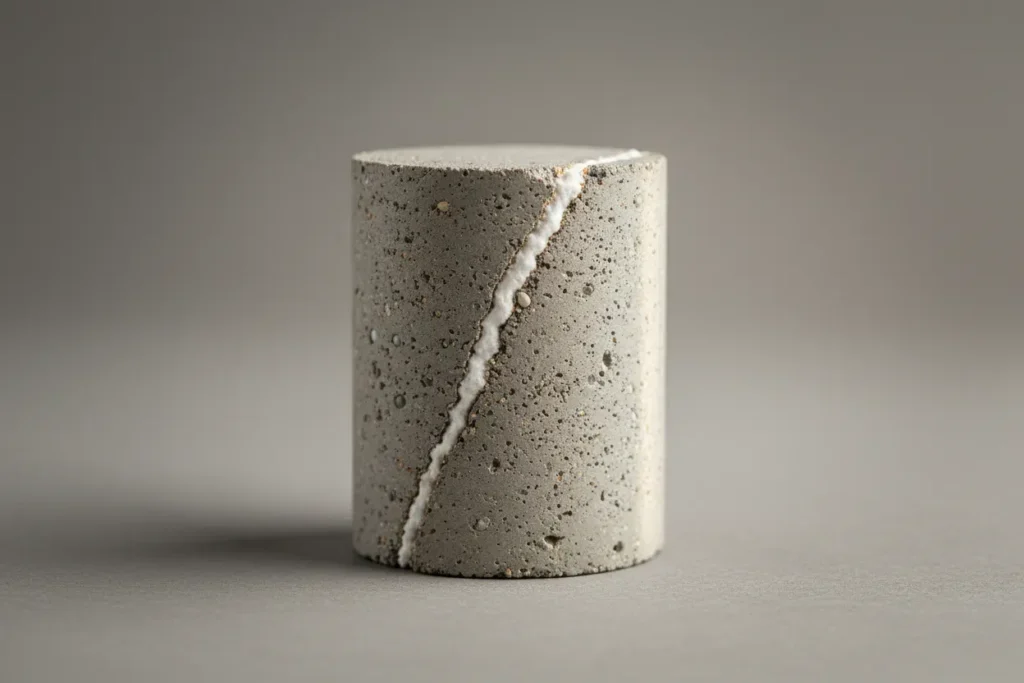
One unconventional biotech application I’ve explored is using microbial enzymes to create self-healing concrete. During my medical research, I became fascinated by how the human body repairs tissue, and I began collaborating with materials scientists to apply similar regenerative principles to construction. We developed a formulation in which dormant bacteria embedded in the concrete become active when cracks appear, producing calcium carbonate that naturally seals the fissures.
This innovation could completely transform manufacturing and construction by extending the lifespan of structures while reducing maintenance costs and environmental impact. Imagine bridges or buildings that can “heal” themselves after stress or minor damage—it’s not science fiction anymore. By learning from biology’s efficiency, we’re reimagining industrial materials to be more sustainable and adaptive. This intersection of medicine, microbiology, and materials science shows that sometimes the best engineering solutions are inspired by the human body itself.

Grow MICP Bio-Cement Onsite
One of the more unconventional biotech applications I’ve encountered recently is the use of microbially induced calcite precipitation (MICP)—a process in which certain bacteria precipitate calcium carbonate to form a cement-like material.
Why it’s a wild but promising idea:
Instead of pouring conventional concrete or relying solely on steel, MICP could allow builders to grow or “bake” structural components in place using living organisms and minimal raw materials. This reduces the need for heavy cement plants and could cut carbon emissions significantly.
For renovation or repair work, MICP-based bio-cements can be applied to fill cracks or as bonding layers, offering self-healing potential. The living microbes can reactivate when new microcracks form, sealing them with fresh mineral deposits.
How this could transform manufacturing or construction (especially for someone like you in steel supply):
You might find a hybrid future: a mix of traditional steel framing with bio-cement infill, reducing reliance on bulky concrete pours. This could lighten overall building weight, simplify transport and logistics (especially at remote sites), and reduce costs related to concrete sourcing.
This approach might open doors to more sustainable, on-site “grown” structures, which could complement steel products rather than replace them. For example: steel frames for the load-bearing skeleton and bio-cement for walls or infill.
Of course, my understanding is limited: MICP is still largely experimental for large-scale, load-bearing structures. We don’t yet have decades of real-world performance data, and long-term durability under varying weather or load cycles remains uncertain.
But that uncertainty is part of what makes the idea so exciting. If scaled successfully, this bio-cement and traditional steel hybrid could reshape how we think about building materials—reducing the carbon footprint, cutting transport and raw material costs, and giving you, as a steel supplier, a wider palette of materials to offer.

Use Mycelium for Low-Carbon Blocks
One new biotech idea is to use mycelium, the root-like structure of fungi, to make building materials. Mycelium has been used to create lightweight, biodegradable forms. It could be an alternative to plastic or concrete building blocks. This could reduce waste and decrease carbon emissions. It is also pliable, meaning it can be used in many ways. This might greenify construction and possibly manufacturing.

Build Protein Nanowires for Green Electronics
Engineered microbes can grow protein nanowires that move charge along tiny filaments. These wires are light, flexible, and free of scarce metals. They can be cast into films for sensors, low power chips, and devices that draw power from air moisture. The parts can be made at room heat and can break down at end of use.
Key hurdles are mass yield, wire alignment, and stable contacts to standard circuits. Work on gentle doping and roll to roll assembly is underway across labs and startups. Back manufacturing demos and co design devices that use bio wires now.
Adopt Enzymes for True Plastic Circularity
New enzymes can cut common plastics back into their simple building blocks at low heat. This turns mixed or dirty waste into material as pure as new resin. Energy use and greenhouse gases drop because harsh heat and chemicals are not needed. The process can run in water and can work with sorted bales or on site at plants.
Work is still needed on enzyme life, reactor design, and removing dyes that slow the cut. Cities and brands can back pilots and write rules that favor true circular content. Support enzyme recycling hubs and demand closed loop resin today.
Advance Microbial Spider Silk Fibers
Fermented spider silk is produced by engineered microbes that spin silk proteins in tanks using sugar feedstocks. The fibers match or beat the strength and toughness of petroleum synthetics while staying light and soft. They can be made without toxic solvents and can break down at end of life. Uses range from performance textiles to medical sutures and impact resistant parts.
The main hurdles are spinning at scale, cost, and steady quality across batches. Brands and suppliers can speed progress with long term contracts and shared pilot lines. Commit to early procurement and help launch commercial scale runs now.
Harness Cellulose Films from Food Waste
Bacterial cellulose is grown as a clean web of tiny fibers that form strong, flexible films. It is free of lignin and hemicellulose, so it needs little post work to reach high purity. The films breathe, hold water, and shape to complex forms for skin and device uses. With coatings or cross links, they can resist moisture and block oxygen for food or device parts.
Low cost feedstocks like food waste can power growth, and co cultures can add color or function. Remaining gaps include drying without shrink and scaling sheets wider than lab size. Join partners to test coatings, scale fermenters, and qualify parts in real products now.
Deploy Mussel-Inspired Wet Adhesive Systems
Mussel inspired glues copy the catechol groups that let mussels stick to rocks in waves. These polymers grab wet or salty surfaces and then cure into strong bonds. They can set without harsh solvents and can work on metals, concrete, and tissue. Tooling for ship repair, pipeline seals, and dental work can improve with this safer wet adhesion.
Research still must prove long life under biofouling and find fast cure at low heat. Supply of safe dopamine like feedstocks also needs to scale. Fund field trials and request wet bond specs in upcoming projects today.