


Finding purpose can reshape mental health in powerful ways, yet many struggle to identify where meaning lives in their daily lives. This article draws on insights from clinicians, researchers, and practitioners who have studied the connection between purposeful action and psychological well-being. It offers 25 practical strategies that translate abstract ideas about meaning into concrete steps anyone can take.
- Follow The Thread That Always Drew You
- Turn Your Hurt Into Help For Others
- Hold Fast To A Larger Why
- Translate Suffering Into Science-Guided Transformation
- Choose Visibility And Feel The Alignment
- Write Through Hard Seasons And Share It
- Pursue Authentic Answers To Existential Doubts
- Stay Close To The Frontline To Recenter
- Convert Rejection Into A Lifelong Call
- Center Values And Ditch External Scorecards
- Schedule Duty So Someone Counts On You
- Give Your Pain A Constructive Direction
- Grow Heritage Through Hands-On Plant Art
- Keep A Real Project On The Table
- Use Aim To Sort Fear And Act
- Solve Your Own Problem Then Serve Many
- Practice Evidence Triage To Guard Clarity
- Stack Small Wins To Rebuild Confidence
- Let A Larger Frame Reorient Daily Choices
- Root Your Work In What Matters
- Prioritize Growth And Reframe Setbacks In School
- Let A Tangible Challenge Organize Uncertainty
- Support Healers And Amplify Their Voice
- Create Calm Homes And See The Reward
Follow The Thread That Always Drew You
For years, I thought my problem was that I was too curious.
I was fascinated by many different fields and kept exploring new directions: opera directing, music research, even electrical engineering. But whenever I went deeper into a subject, I eventually felt restless. I could become very interested in the topic, but I couldn’t see a deeper purpose in it.
I eventually spent many years in management at one of the largest education companies, where I was responsible for complex projects and teams. Again, I could do the work well, but many of the tasks left me surprisingly bored. The moments that truly energized me were different: coaching employees and helping complex teams navigate difficult situations.
I still didn’t recognize the pattern.
Then intense professional stress made me seriously and chronically ill. Looking for a different way to regain my health, I discovered Ayurveda and eventually recovered from my symptoms. The experience was so transformative that I wanted to help other people access the kind of change I had experienced myself. I started a consulting practice – and, for the first time in my professional life, I felt deeply and consistently fulfilled.
Today, after 20 years of coaching experience and more than six years specializing in happiness coaching, I finally understand what I had overlooked for decades: my real interest was never a particular subject. It was people.
I had simply dismissed that interest because I didn’t believe that being fascinated by people could have any real professional value.
It turned out to be exactly the opposite.
Today, helping people become happier and build a life that feels meaningful is what gives my own life the greatest sense of purpose. And interestingly, the result has gone far beyond professional fulfillment: I am more psychologically balanced, physically stable, and content than I have ever been.
My biggest lesson is that purpose doesn’t always appear as a grand calling. Sometimes it is the quiet thread running through everything you’ve done – even the things that seemed unrelated at the time. The question is whether you are paying enough attention to recognize it.
Christina Zech, Positive Psychology | Science of Happiness | Resilience | Wellbeing Expert, Christina Zech
Turn Your Hurt Into Help For Others
Purpose is the thing that reorganized my mental health more than any single skill or technique.
For years I believed my emotional sensitivity was a flaw I needed to fix. Learning DBT (Dialectical Behavior Therapy) skills changed that, but what changed me most was turning what I’d been through into something useful for other people.
In 2013 I founded DBT Path at emotionallysensitive.com, an online DBT skills class, because I knew there were people like me sitting at home who couldn’t find or access this kind of education.
Thirteen years later, it’s still what gets me up in the morning. On my hardest days, remembering that a student somewhere is using a skill I taught them to get through their own hard day steadies me. I even hear from them from time to time via email or messaging, letting me know, and it’s like a spark of light on my journey.
I would tell others that if you’re looking for your purpose, start with the thing that hurt you most. There’s usually a door there.
Debbie DeMarco Bennett, Founder, Mental Health Educator & Human-Centered AI Strategist, DBT Path, LLC
Hold Fast To A Larger Why
Having a sense of purpose has been one of the steadiest supports for my own mental health, and I see the same thing in the people I care for. Purpose works like an anchor. Hard days still come, but purpose gives you a reason to keep going that is bigger than the bad moment.
“Purpose does not remove stress. It gives you a place to stand while you deal with it.”
There is good science behind this too. Research links a strong sense of meaning to lower rates of depression and anxiety, better sleep, and a greater ability to bounce back after setbacks. When people feel their life matters, their minds tend to settle.
For me, purpose is my work. I chose psychiatric mental health nursing because helping someone move from their worst days to steadier ground means a great deal to me. On the hard days, remembering why I do this pulls me back.
“You do not have to find one grand purpose. You just have to find one thing that makes you feel useful, and take a step toward it.”
That is how I would tell anyone to start. Purpose is not a lightning bolt that strikes once. It is built slowly, through small choices that match what you care about. It might be caring for family, a craft, your faith, mentoring, or a cause you believe in.
“Meaning is not something you wait to receive. It is something you practice.”
If low mood or worry is making it hard to feel any purpose at all, that is worth talking through with a professional. Sometimes a sense of purpose returns once the depression or anxiety underneath it is treated.

Shebna N Osanmoh, Psychiatric Nurse Practitioner, Savantcare
Translate Suffering Into Science-Guided Transformation
Viktor Frankl wrote that those who have a “why” to live can bear almost any “how.” I have found this principle aligns with both neuroscience and my own experience. Cultivating purpose does not remove pain or adversity, but it changes how the brain and nervous system respond by fostering hope, direction, and motivation. As a trauma and mental health expert, I have seen that meaning-making is a powerful catalyst for resilience and post-traumatic growth. It shifts the focus from “Why did this happen to me?” to “How can I use this experience to create something meaningful?”
Founding Transforming Pain Now® allowed me to translate neuroscience, neuroplasticity, and trauma recovery into practical programs that help individuals and organizations move beyond survival toward authentic, empowered thriving. This mission has shaped my career and strengthened my own resilience during challenges.
Purpose serves as an anchor in uncertain times and reminds us that even our most difficult experiences can become sources of healing and contribution. While purpose is not a substitute for mental health treatment when needed, it is a powerful protective factor that supports emotional well-being and long-term psychological growth. In my experience, healing begins not only when people recover from what happened to them, but also when they discover who they are becoming in spite of it.
Dr Kristen Szabla, Founder, CEO, PhD trained Nueorscientist, Trauma and Mental Helath Expertt, Transforming Pain Now, LLC
Choose Visibility And Feel The Alignment
For sixteen years I coached people privately — quietly, on the side, while holding a corporate career that looked successful and felt hollow. People trusted me with their hardest conversations. I helped them through decisions, transitions, things they couldn’t say to anyone else. Then I’d go back to the role I was supposed to be in and pretend that wasn’t the thing I actually wanted to be doing full time.
The mental health cost of that split was real. Not dramatic — just a persistent low-level drain I got so used to I stopped noticing it. I’d built a life that checked every external box and skipped the one that mattered.
Launching Desert Roots Wellness publicly — putting my name on it, building something visibly and unapologetically mine — was uncomfortable in ways I didn’t expect. There’s a specific vulnerability in stepping out from behind the scenes. You can’t quietly do good work anymore. You’re the work.
What changed mentally wasn’t confidence. It was alignment. The hollowness lifted not because I’d found my calling — I’d always known what it was — but because I stopped hiding it.
The mind-body-soul framework we built into the practice came from understanding that the split I’d been living wasn’t just a career problem. The body carries the cost of misalignment before the mind admits it. Getting honest about purpose meant getting honest about all of it.
The boundaries got clearer when the work became mine. That part surprised me most.

Samka Keranovic, Co-Founder, Desert Roots Wellness LLC
Write Through Hard Seasons And Share It
I have found that purpose and meaning-making are the key skills that help people create lives they feel good about. We all go through stuff, but it is how we frame it, how we learn from and grow from it, that matters.
A few years ago I was genuinely in the thick of it: a new city, between careers, no money, living paycheck to paycheck, and grieving the recent death of my sister. I needed someone to help me make meaning out of all this hard stuff and find ways to build purpose out of it – so I became that person for myself. I started writing guided meditations for myself just to get through the hard days. I wasn’t calm or successful when I wrote them, I was still in the middle of it.
At some point the writing shifted from something I needed privately into something I realized other people probably needed too, because most meditation content is written by someone who already arrived somewhere peaceful, not by someone still finding their footing. That’s actually where Walking Meditation came from. For me, purpose didn’t show up as one clear moment of clarity, it showed up as noticing that the thing helping me survive a hard season might help someone else survive theirs.

Breanna Reeser, Meditation Teacher, CEO, Walking Meditation
Pursue Authentic Answers To Existential Doubts
This is a fascinating question, with answers deeply rooted in existentialism, a school of therapy developed by Irving Yalom that explores how individuals’ anxiety and depression can stem from unresolved questions around meaning and purpose. These unanswered questions can often percolate into emotional struggles and symptoms such as anxiety.
This is something I have absolutely found to be true in my work with clients. I have had many men come into therapy feeling stressed about work, only for us to find ourselves 20 sessions later exploring much larger and more existential questions, such as: “What is the purpose of my life?” or “What if everything is meaningless?” The power of these questions comes from the fact that they often do not have a concrete or universal answer, which is where much of the fear and uncertainty comes from. It becomes less about discovering the objectively correct answer and more about finding the answer that feels most authentic and meaningful to you.
Personally, before becoming a therapist, I worked in finance and struggled to find a sense of meaning and purpose because my day-to-day life felt disconnected from what I truly valued: helping others with their mental health. It was only after transitioning careers and gaining clarity around my own answers to these existential questions that I began to experience a greater sense of gratitude and groundedness. Now, I have the privilege of waking up every day and helping others explore these same questions for themselves.
My own journey toward answering these questions was not as simple as I may have made it sound. It involved backpacking through 55 countries and taking time to deeply reflect on what I wanted my life to represent. While this type of journey can sometimes sound like a cliche, it was an incredibly meaningful and spiritually rewarding experience for me. It was only after letting go of the life I had previously known that I was able to begin constructing a life that felt more genuine and aligned with who I wanted to become.

Jordan Wiener, Registered Psychotherapist, Basecamp Therapy
Stay Close To The Frontline To Recenter
It has probably done more for my mental health than almost anything else I’ve worked on. When I started this field, I was drawn to it because I wanted to help people who felt stuck the way I once did. That reason kept me steady through the hardest parts of this work, the burnout, the long hours, the heaviness that comes with sitting with other people’s pain every day. Having that “why” underneath it all gave me something to come back to on the days I felt tired or discouraged.
One way I’ve pursued my purpose is by staying close to the clinical work even as my role became more administrative. I could easily spend all my time in meetings and budgets as an Executive Director, but I make it a point to still connect with clients and families whenever I can. That connection reminds me why I do this. It’s easy to lose sight of purpose when you’re buried in logistics, so I’ve had to be intentional about protecting that part of my week.

Aja Chavez, National Executive Director, Mission Prep Healthcare
Convert Rejection Into A Lifelong Call
I found my purpose by actually being denied what I thought my purpose was. I originally joined the military and then had been discharged due to mental health being in my past and history. This entire process ended up being what felt like me fighting tooth and nail against a gigantic systemic injustice and fueled me to ask, “Why is this happening to me?”
I had been exhausted, run down, and felt like I’d been grasping for straws on any way to make my dream come true. Ultimately, this pushed me to reflection and identifying my driving force of a service for others. Out of the ashes of losing my chance to serve my country was the idea of serving others for mental health services. This is how I found myself in graduate schooling at the University of Nebraska Omaha and then how I found myself becoming a mental health professional (e.g. LPC and LPCC) in multiple states. I founded a private practice in 2024—Dialectical Pathway to Wellness, and love the job I get to do everyday.

Addison Sayre-Adona, Owner and Operator, Dialectical Pathways to Wellness
Center Values And Ditch External Scorecards
Cultivating a sense of purpose has helped me reframe my mental health as tied to living by self-defined values rather than chasing external measures of success. That shift eased the pressure of comparison and made daily choices feel more grounded and manageable. One concrete way I have pursued my purpose is by centering “finding purpose and redefining success on your own terms” in my therapy work with post-grad clients. Doing this both reinforces my own commitment to value-driven practice and gives clients a practical path toward more meaningful goals.

Cristina Lugo, LCSW and EMDR expert for Young Adults and Teenagers, Cristina Lugo Psychotherapy
Schedule Duty So Someone Counts On You
I will speak to this as habits and wellbeing rather than as mental health treatment, which is a different conversation and belongs with a therapist or counselor.
What I notice in primary care is that people describe purpose in terms of being useful to someone specific, not in large abstractions. When somebody tells me their weeks feel flat, the thing missing is often not a life plan. It is a reason that a particular Tuesday matters to a particular person.
For me the anchor has been teaching. I started running a free community session on how to prepare for a medical appointment. What to write down, what to ask, how to say out loud that you did not understand something. The first one had 8 people in a borrowed room, several of them talking about having been brushed off by clinicians in the past. It was small, and it was the most useful hour of that month.
It steadied my own head more than any wellness habit I have tried, because it put me back in contact with the reason I trained, which payroll and paperwork can bury.
The practical version I would offer is this. Purpose tends to be found in a scheduled commitment to other people rather than in reflection. Put something in the calendar where somebody would notice if you failed to show up, and the meaning turns up on its own.

Anna Evans, Founder, Interlinked Wellness
Give Your Pain A Constructive Direction
Purpose was the thing that pulled me out. After losing both parents and a marriage in close succession, I didn’t recover by processing grief in the abstract. I recovered by building something. A Necessary Murder started as a way to make sense of what I’d been through—tarot and astrology read alongside real trauma work like EMDR and IFS—and it became the actual mechanism of getting better. Purpose gave the pain somewhere to go besides just sitting in me. Now I write about it directly, because the same thing that helped me is often the thing nobody tells people is available to them.

Eli Coe, Owner, A Necessary Murder
Grow Heritage Through Hands-On Plant Art
Cultivating a sense of purpose through my plant-centered work has been central to my mental health, giving me steady meaning and calm. What began as a hobby with leftover wedding succulents and my grandmother’s vintage cafetera pots evolved into a creative calling that connects my personal history and culture to my work. I pursued that purpose by turning the hobby into mindful plant workshops and making hands-on plant activities a regular part of my practice. That ongoing, tangible creative work helps me stay grounded and present in both my personal life and professional work.
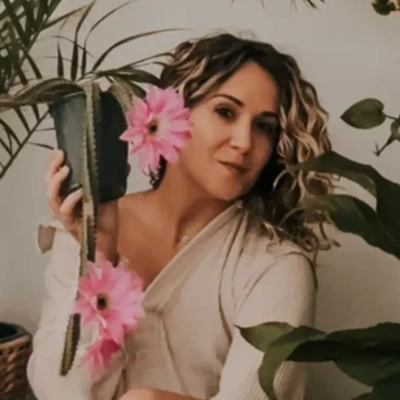
Erika Valdes, A pediatric occupational therapist and holistic practitioner, Play2Learn Plant2Grow
Keep A Real Project On The Table
I’m wary of the word “purpose” — it gets used like a candle you’re supposed to light and stare at. For me it’s never been a lofty thing I discovered on a retreat. It’s more mundane and more durable than that: I feel best when I’m building something real and worst when I’m not. That’s most of it.
What I’ve actually noticed is that meaning, for me, is a byproduct, not a target. When I chase it directly — “am I doing something that matters” — I mostly just make myself anxious. When I’m heads-down making a real thing work, the question quietly answers itself and stops needing to be asked. The people I know who are most lost aren’t the ones without a grand mission; they’re the ones with nothing concrete in front of them to move. Idle hands, idle head.
So the “one way” isn’t a practice in the wellness sense — it’s just that I keep something real under construction at all times. A product, a problem, a thing with a scoreboard where I can tell whether I’m winning or losing. Building has a feedback loop: you do the work, something moves or it doesn’t, and you’re grounded in the actual instead of the abstract. That loop does more for my head than any amount of reflecting on whether my life has meaning. The reflecting tends to spiral. The building doesn’t.
The mental-health piece, if I’m honest, runs the other way from how people usually tell it. It’s not that I found purpose and then felt better. It’s that having a concrete thing to build kept me steady, and the steadiness is what let me feel anything like purpose. Cause and effect are flipped from the motivational version. Give me a real problem and a way to know if I’m solving it, and the existential weather mostly clears on its own.
The trap is thinking purpose has to be enormous to count. It doesn’t. A small thing you’re genuinely trying to make good is plenty. Grand missions are mostly for conference stages. A real problem in front of you, that you care about getting right, will carry you further than any mission statement — and it’s a lot easier to get out of bed for.

Eric Lafleche, Founder, Pitch
Use Aim To Sort Fear And Act
Purpose has done more for my mental health than anything else I tried, but not in the way it usually gets described.
The version people sell is that purpose makes you feel good. In my experience it does the opposite first. Building Eprezto as Panama’s first fully digital car insurance brokerage, bootstrapped with no outside funding, meant years of carrying decisions and pressure that nobody around me fully understood. Purpose is what makes that bearable. It does not make it pleasant.
Where it genuinely helps is in sorting one kind of anxiety from another. There is anxiety that comes from real problems, sales being down, a number moving the wrong way. And there is anxiety that comes from imagined expectations, the what will people think if I fail scenario that has not happened and may never. The second kind is the one that does the damage, because there is nothing to act on. Having a clear purpose is what lets me put it down and go work on the first kind instead. Concrete, fixable problems and data are the way back.
The other half is physical, and I would not separate the two. Exercise is my number one habit. I go at lunchtime, treadmill or stair climber, and I bring whatever I am carrying with me. It doubles as a mindfulness reset. My head clears, the stress drops, and the same problem looks smaller than it did an hour earlier.
How I found the purpose is unglamorous. I did not sit down and define it. I picked an industry where the customer experience was genuinely bad and kept working on the part of it that bothered me most. The meaning showed up afterwards, inside the work, not in front of it in a plan.
If you are waiting to feel purposeful before you start, you have the order backwards.
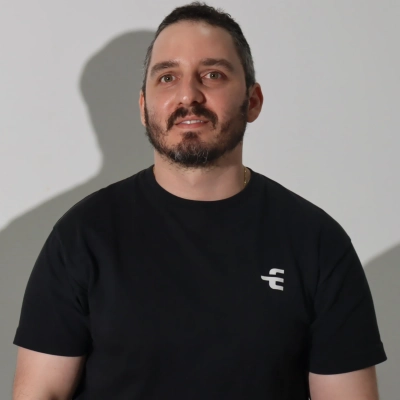
Louis Ducruet, Founder and CEO, Eprezto
Solve Your Own Problem Then Serve Many
I found my purpose by working on problems I’d personally struggled with. Years ago I dealt with chronic foot and joint pain, and the products available felt generic and unhelpful. So I started designing solutions myself, grounded in what I knew from my medical background. That single decision changed my mental health, because every morning I woke up knowing exactly what I was working toward and why it mattered.
The practical effect was that stressful days stopped feeling meaningless. When a product launch hit a snag or a supply chain issue ate up my week, I could still connect it back to someone getting relief they hadn’t found before. That thread kept me steady during stretches that would have burned me out in a job I didn’t care about.
I’ve held onto that sense of purpose by staying close to customer feedback. I read messages from people describing how a product helped them walk without pain or sleep through the night, and I keep a folder of those. On bad days I open it.

Ben Frederick, Founder, Dr. Frederick’s Original
Practice Evidence Triage To Guard Clarity
A sense of meaning has helped mental health by making uncertainty more tolerable. In fields touching sleep, recovery, and emerging research, ambiguity is constant, and that can be draining unless there is a reason to stay disciplined inside it. Purpose creates that discipline. It shifts attention away from ego metrics and toward whether the work is reducing misinformation, improving decision quality, and respecting the difference between early evidence and established findings.
One way I have pursued that purpose is through evidence triage. Before adopting a claim, material, or message, the question becomes whether it is technically reliable, understandable to ordinary households, and honest about its limitations. That habit protects both trust and peace of mind.
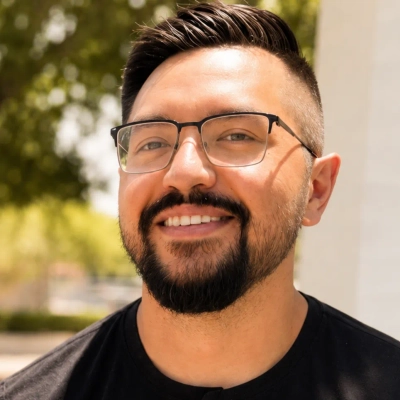
Michael Collins, Founder, Earthbound
Stack Small Wins To Rebuild Confidence
Cultivating a sense of purpose after my college traumatic brain injury was essential to stabilizing my mental health and carrying me through the many peaks and valleys of recovery. Focusing on small victories and setting daily goals gave me structure and a measurable sense of progress on days when my brain did not cooperate. One concrete way I pursued purpose was staying busy with small, peaceful projects like photography and coloring while also building my career, which reminded me I was still capable. Asking my family for help and leaning into those tasks transformed my outlook and eventually allowed me to found LOGA Golf and move forward with confidence.
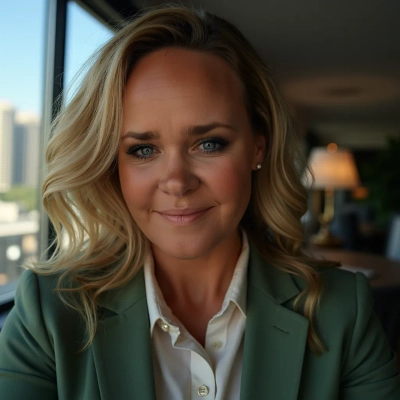
KATELYN JOSEPH, FOUNDER, LOGA GOLF
Let A Larger Frame Reorient Daily Choices
Purpose works for mental health because it provides a bigger frame of reference for our pain (without having to believe life should feel wonderful at all times). I see this in psychiatric care often – people are actually suffering when they feel disconnected from what is meaningful, as much as when they’re experiencing stress. Purpose does not need to be vast or thoroughly constructed, but could simply be whatever brings your attention, values and commitments back home.
You can then explore how to engage with that: by asking, “What person do I want the choices I make today to make me?” By thinking of purpose as being woven into our daily actions.

Lauren Williams, Psychiatrist & Founder, Dr. Lauren Williams
Root Your Work In What Matters
Cultivating a clear sense of purpose has helped me stay grounded during demanding seasons, especially while becoming a mom and building a business at the same time. When my days feel overwhelming, reconnecting to why I am doing this brings perspective and steadies my mental health. One way I have pursued my purpose is by building R&R Motherhood so my work is rooted in passion and purpose, and so I can show my children what it looks like to create a career you believe in. That sense of meaning helps me push forward even on minimal sleep and with a lot on my mind. It also reminds me that resilience is built one intentional step at a time.

Aarani Montanari, Founder, R&R Motherhood
Prioritize Growth And Reframe Setbacks In School
One reason a sense of purpose is so grounding is that it puts all those daily challenges into perspective. Since growth in education isn’t always linear, I focus on the bigger picture: helping students develop confidence, independence, and a healthier relationship with learning. That mindset makes setbacks easier to navigate and victories even more rewarding. It also supports my mental well-being because it defines success in terms of growth, not just results.
Noticing these little moments of progress keeps me grounded in my WHY. I see them and hear their stories, reminding me that real growth happens one step at a time—whether it be a child volunteering to read out loud for the first time or overcoming a task they ran away from before.

Dalbin Osorio, Director, Dyslexia Tutoring Program
Let A Tangible Challenge Organize Uncertainty
Purpose has helped me turn a major career transition into a direction rather than only a disruption.
After 15 years in accounting and finance management, I began building HesapCebimde to make complex financial decisions easier for ordinary users to understand. The work combines my existing experience with new skills in software, publishing and artificial intelligence.
Having a useful problem to solve gives difficult learning periods a reason. A technical failure or slow result still feels frustrating, but it becomes part of building something rather than evidence that the career change was a mistake.
I found that purpose through work already close to me: the financial questions people repeatedly misunderstand and the hidden costs that appear after a decision.
Meaning did not remove uncertainty. It gave uncertainty a structure and made continued learning feel connected to a contribution beyond my own career.

Cem Oner, Founder / Finance & Public Data Publisher, Hesap Cebimde
Support Healers And Amplify Their Voice
Cultivating a clear sense of purpose in serving therapists and wellness professionals has improved my mental health by giving my daily work consistent meaning and reducing uncertainty about why I do what I do. It has helped me feel more grounded and resilient during challenging periods because my work aligns with my values. One concrete way I pursued this purpose was intentionally shifting my business to focus on strategic website design and SEO for therapists and private practices. That change lets me support emotional work indirectly by helping clinicians attract clients and communicate trust, and I prioritize listening to practitioners so their sites reflect their voice and care.

Natalia Maganda, Website Design and SEO For Therapists and Private Practice, Natalia Maganda
Create Calm Homes And See The Reward
Running a home organizing company has given me a real sense of purpose because I get to help people through some of the most stressful seasons of their lives. Whether someone is preparing for a move, feeling overwhelmed by clutter, or simply wants to enjoy their home again, it’s incredibly rewarding to see the transformation. Knowing that my work helps people feel less stressed, more in control, and happier in their homes has had a positive impact on my own mental health as well. It reminds me that the work I do genuinely makes a difference.
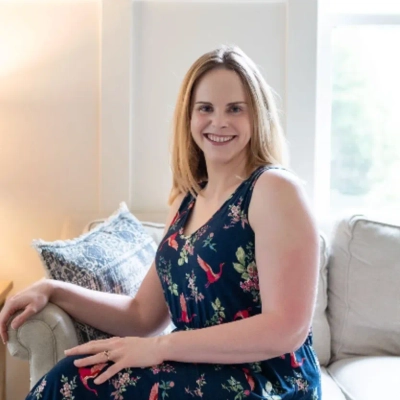
Gillian Economou, Owner & Professional Organizer, Sort it Out