

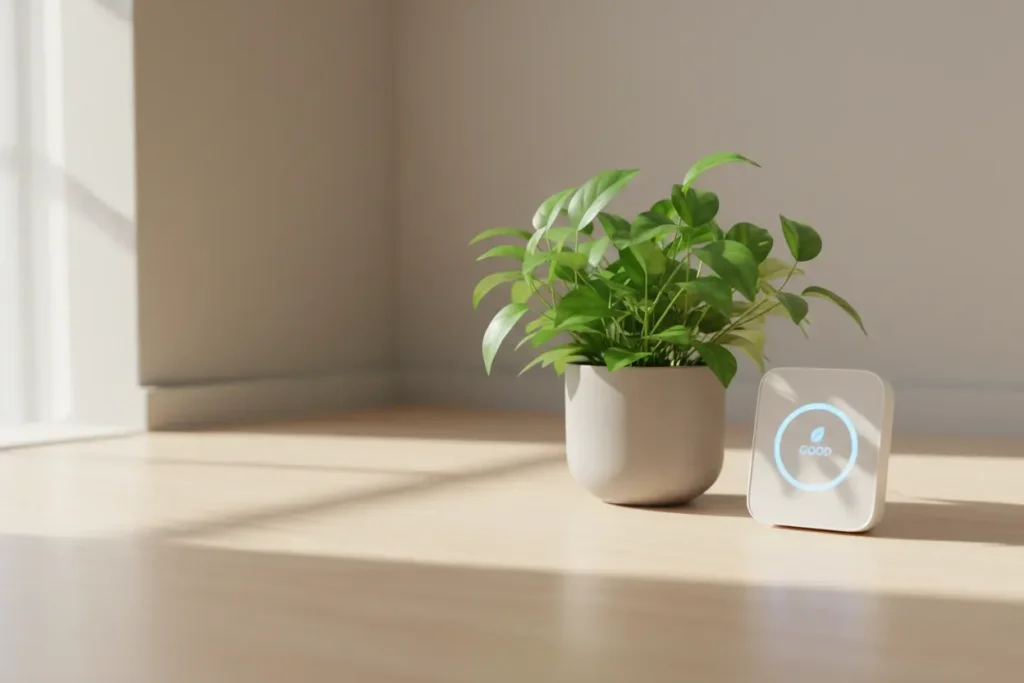
Small changes in the home can have a surprisingly powerful effect on mental health and daily stress levels. This article brings together insights from mental wellness experts and design professionals who explain how specific home improvements—from lighting adjustments to layout tweaks—can create meaningful emotional shifts. These real-life stories demonstrate practical ways to turn living spaces into environments that actively support mental well-being.
- Transform Entryways to Lift Homecomings
- Choose Nontoxic Cleaners to Ease Chores
- Build a Spa Bathroom to Reduce Overstimulation
- Declutter Rooms to Expand Mental Bandwidth
- Fix Airflow to Quiet Mold Worries
- Warm LEDs Ease Evening Tension
- Clear Surfaces Before Bedtime
- Repair Roof Damage to Reinforce Security
- Restore Curb Appeal to Renew Pride
- Eliminate Morning Friction Through Smarter Layouts
- Empty a Windowsill to Reclaim Focus
- Choose Open Rooms That Revive Energy
- Use Scent to Signal Care
- Add an Air Purifier for Better Sleep
- Install Clear Shower Glass for Dawn Serenity
- Stage Training Gear to Remove Excuses
- Designate a Retreat That Signals Closure
- Humidify Your Space to Banish Dryness
- Shape Backyards That Invite After-Hours Ease
- Reclaim Your Bathroom From Product Overflow
- Honor Yourself Through Peaceful Surroundings
- Display Local Art That Affirms Identity
- Reserve One Chair for Mental Reset
- Create a Wellness Corner for Daily Balance
- Place Plants Beside Tough Reviews
Transform Entryways to Lift Homecomings
Two decades of walking through people’s homes before and after renovations has shown me something most designers won’t admit: the *transition spaces* matter more than the showpiece rooms.
One client in Easton had a cramped, dark entryway. Every single day she walked into clutter and low ceilings. We opened that entry, added natural light, and suddenly she told me she stopped dreading coming home from work. The space was setting her emotional tone before she even sat down.
What nobody talks about is how disorder in a home creates a kind of invisible mental tax you pay constantly. You stop *seeing* the problem consciously, but your brain never stops processing it. Fixing the structure removes that charge entirely.
If budget is a concern, I always tell people: start with the room you enter or exit most. That threshold moment shapes your whole day in both directions.

Henry Rouhana, Owner, SURE-FIX Remodeling
Choose Nontoxic Cleaners to Ease Chores
I’ve run a cleaning company in the San Francisco Bay Area for over 16 years, so the honest answer is that the change that helped me most had nothing to do with tidiness.
It was switching my own home over to the same non-toxic products we had already standardized on at work. I expected no benefit from it. I did it mostly to stay consistent with what I was telling clients. What I got instead was the absence of something I had never noticed was there: that sharp chemical afterburn that hangs in a bathroom for an hour after you clean it. I had spent my whole life reading that smell as “clean.” Once it was gone, I realized I had been quietly bracing against it every time I walked into the room.
The daily impact was small and specific. Cleaning stopped costing me anything unpleasant, so it stopped being something I put off, so it stopped piling up.
That last part is what most people miss. The mental health benefit of improving a living space is rarely about the finished result. It is about lowering the friction of maintaining it. If the act of cleaning is unpleasant, you delay it, and the delay turns into a running mental tab of every room you are behind on. That tab is the actual stressor. Not the dust.
I see the same pattern in clients’ homes across the Bay Area. People book us thinking they want a tidy house. What they describe afterward is relief, not satisfaction. Those are two different emotions, and the gap between them tells you the problem was never really the mess.
If someone wants the cheapest version of this experiment, my advice is: don’t reorganize anything, and don’t buy storage bins. Change what you’re cleaning with first. It costs almost nothing, and it changes how a room feels to be inside, which is most of what “improving your living space” actually means.
At Green Planet Cleaning Services, we made that switch across the whole company years ago, and the thing that surprised me was never the results on the surfaces. It was how differently people talked about being in the room afterward.
Marcos De Andrade, Founder & Owner, Green Planet Cleaning Services, greenplanetcleaningservices.com

Marcos De Andrade, Founder & Owner, Green Planet Cleaning Services
Build a Spa Bathroom to Reduce Overstimulation
As a design-build contractor in Orange County leading full-home renovations, I have seen how sensory clutter in daily spaces quietly drains your mental bandwidth. The most unexpected mental health upgrade comes from eliminating morning overstimulation by turning a functional master bath into a low-stress retreat.
On a bathroom remodel we built in Yorba Linda, adding custom vanities with hidden organizers, layered dimmable lighting, and a walk-in shower with bench seating completely transformed how the homeowners started their day. Instead of stepping into harsh overhead glare and visual countertop clutter, they had a quiet, spa-like environment to wake up in.
That simple design shift removed the subtle cortisol spike of a chaotic morning routine. Starting the day in a calm, intentional space sets an unhurried mental baseline that carries through the rest of a high-stress workday.

Mark Apicella, Owner & President, Turn Key Remodel
Declutter Rooms to Expand Mental Bandwidth
One of the most unexpected shifts I’ve seen, both in my own life and with clients, is how clearing physical clutter creates mental clarity people didn’t know they were missing. When I organize a client’s home, the visible change is storage and layout, but the invisible change is often bigger: people sleep better, feel less anxious walking into a room, and find it easier to focus on decisions that matter.
Moving into life, leadership and executive coaching alongside my organizing work made this connection even clearer: a chaotic environment keeps your mind in a low-grade state of alert, while an organized one gives your nervous system permission to relax. Personally, simplifying my own living space during a hectic season let me actually rest instead of constantly noticing “undone” tasks out of the corner of my eye. That change reshaped my daily routine: mornings got calmer, and I had more mental bandwidth left for the people and things that actually mattered. It’s a good reminder that home improvement isn’t just aesthetic… it’s often the first, most practical step toward better mental health.

Olympia von Berg, Professional Organizer & Life, Leadership and Executive Coach (In-Training), Organizing by Olympia, Ltd.
Fix Airflow to Quiet Mold Worries
The mold itself never worried me as much as the uncertainty did. My bathroom fan barely moved air. A closet always smelled a little off. I couldn’t tell if that was a real problem or just me being paranoid. That question sat in my head more than I’d like to admit. I fixed the airflow. I added a dehumidifier for the humid months. I actually cleaned the corners instead of just wiping the visible spot. The smell went away. So did the low hum of worry.
The daily change felt small. I stopped opening that closet to sniff it. I stopped checking the grout every time I showered. Mornings got quieter in my head.

Victor Smushkevich, Founder, Mold Scanner AI
Warm LEDs Ease Evening Tension
Modifying ambient lighting in my home by replacing standard overhead lights with dimmable multilayer LED task and accent lighting at very specific kelvin temperatures has had an enormous impact on my ability to relax in the evenings. Having overhead lighting that is too bright puts a constant strain on my eyes and leaves my central nervous system in a near-constantly heightened state of arousal. By putting in dimmable under-cabinet channels and using ambient LED strips at a warm 2700K, I’ve trained my body to wind down earlier in the evenings. The simple change has drastically cut my sleep onset latency and resulted in easier mornings where I’m not endlessly tired and mopey.

Josh Qian, COO and Co-Founder, LINQ Kitchen formerly BestOnlineCabinets
Clear Surfaces Before Bedtime
The unexpected part was decision fatigue. Being inside homes for work, I keep noticing that clutter functions like a to-do list you pass a dozen times a day. A stack of mail on the counter holds a dozen tiny unresolved choices. I started resetting a few surfaces before bed instead of after work, and mornings began with a finished room instead of a pile waiting on me. That freed-up energy showed up somewhere concrete, in getting out the door faster and holding onto patience further into the afternoon. The change itself takes about fifteen minutes before bed. The lasting effect is skipping a daily renegotiation with the same ten objects, and that adds up across a week more than a single deep clean ever does. It changed the texture of my mornings more than it changed how the apartment looked.

Carolyn Vasquez, Founder, Ready Rental Cleaning
Repair Roof Damage to Reinforce Security
Roofing of all things. That’s my unexpected answer.
I was living under a roof that had slow, hidden damage—nothing dramatic, just subtle staining on the ceiling after heavy rain, a musty smell in one room. I kept telling myself it wasn’t that bad. But unconsciously I was bracing every time a storm rolled through the Treasure Valley, and that low-level tension was bleeding into everything else at home.
The day we replaced that roof, something genuinely shifted. My home stopped feeling like a liability and started feeling like a refuge again. As a firefighter EMT, I already spend shifts anticipating worst-case scenarios—the last thing I needed was to carry that same vigilance into my own house.
What I’d tell people is this: don’t underestimate what a compromised overhead structure does to your sense of safety. The roof is literally your first line of defense, and when it’s failing, some part of your brain knows it even if you’re not consciously tracking it. Fixing it isn’t just maintenance—it’s restoring the feeling that your home is actually protecting you.

Kason Walton, Owner, Lassiter Roofing Team
Restore Curb Appeal to Renew Pride
I’ve spent years walking through people’s homes right after storms tear through Alabama — and what I didn’t expect was how much the appearance of a roof transformation changes how people feel inside their own space day to day.
One homeowner in Alabaster got a full replacement after storm damage — new architectural shingles, clean lines, fresh install. She called me a week later not to talk about the roof itself, but to say she finally wanted to host family again. The outside of her home had quietly been killing her pride in it.
That’s what most people miss: curb appeal isn’t vanity. When your home looks cared for from the outside, it shifts how you carry yourself inside it. Pride of ownership is a real psychological driver, and a neglected exterior slowly erodes it without you noticing.
My practical takeaway: even a maintenance visit that clears debris, reseals flashing, and cleans up your roofline can reset how you feel about your home entirely. You don’t need a full replacement to get that mental reset. Start with an inspection and just see what’s possible.

Bill Spencer, Owner, Prime Roofing & Restoration
Eliminate Morning Friction Through Smarter Layouts
After 27 years in Southwest Florida custom homes, the most unexpected mental-health boost I see is from fixing “morning friction.” Not adding luxury, but removing tiny daily conflicts in the master suite.
One couple had a beautiful plan, but the bathroom, closet, and bedroom doors all fought each other. We shifted a closet wall, cleaned up the traffic path, and gave the bath better privacy so one person could shower while the other dressed without feeling in the way.
The result was less irritation before the day even started. They weren’t “relaxing” more; they were simply making fewer annoying micro-decisions every morning.
My advice: walk your routine on paper before you build or remodel. Where do you stand, turn, open a drawer, charge a phone, grab clothes, pass another person? That’s where a home quietly affects your headspace.

Micheal Ouellette, Vice President Sales & Business Development, Frey & Son Homes
Empty a Windowsill to Reclaim Focus
I tell clients that visual clutter taxes attention even when you stop seeing it. I’d stopped seeing my own windowsill for most of a year, where material samples had piled up since the last project I rushed through.
I cleared it in about forty minutes, something I’d kept postponing because there was always a more pressing project. I slept better within a week, started eating breakfast at the table instead of at my desk. I didn’t connect either shift to the windowsill until well after the fact.
I’m an interior designer. The advice holds. Apparently it’s harder to take than to give.

Jasmine Ahluwalia, Founder, Asian School of Design & Applied Vastu
Choose Open Rooms That Revive Energy
The first six months in Bali, we were renting a place that looked fine in photos but felt wrong to live in. Low ceilings, dark corners, no real separation between where I worked and where we ate dinner. I’d finish calls feeling drained in a way I couldn’t explain.
We moved to a house with a proper open plan and a dedicated workspace that looked out onto the garden. Nothing dramatic, no renovation, just a different layout. Within two weeks my sleep improved and I stopped grinding through afternoons. My wife noticed the shift before I did.
Co-founding two companies from home means the space you work in is also the space you’re supposed to recover in. At 3D Studio we render spaces for architects and developers all day, and that work quietly taught me how much sightlines and natural light affect mood. Clients will sometimes push back on window sizes or ask us to reduce ceiling heights for cost reasons. I always show them what both versions feel like to inhabit because there’s a real cost to the cheaper option, even if it’s hard to put a number on it.
With a 1-year-old now, the stakes feel higher. She needs room to move. I need somewhere to think. Bad spatial decisions compound daily. A good layout just removes friction you didn’t know was slowing you down.

Siim Kostabi, Founder, 3Dstudio.co
Use Scent to Signal Care
Scent was the change that surprised me. I started treating the smell of a room as part of how it was maintained, the same way I’d think about a clean counter or a clear floor, and the effect on my mood showed up faster than any furniture I moved.
A tidy room stops registering for me after a few days because my eyes adjust to it. Smell doesn’t work that way for me. Walking into a space that smells clean gives me an immediate signal that the place is under control, and I get that signal every time I come through the door instead of once when I finish cleaning.
So I set it up on a schedule. One scent for the kitchen, a different one for the bathroom, and I refresh them on the same schedule as the actual cleaning, before a room smells stale. That way the pleasant part and the maintenance part happen together.
The daily effect was mostly on evenings. Coming home to a space that registered as cared for meant I wasn’t walking in and immediately cataloging chores. I’d sit down first. The chores still got done, and they stopped being the thing that greeted me.

Roy Peer, Founder, Clean Guy
Add an Air Purifier for Better Sleep
A few years back, I installed an air purifier in my bedroom. I’ll sometimes struggle with allergies, and I just wanted to see if having an air purifier in my bedroom would make an overall difference with how I felt. I can absolutely say that it’s made a difference. Because it helps keep the air in my room cleaner, I sleep a lot better. I don’t wake up feeling stuffy like I used to, and according to my sleep tracking app, I sleep deeper and longer on average compared to before I had the air purifier. I’ve found that getting better sleep has a pretty direct impact on my mental health too. Feeling more rested every day helps me feel less stressed and anxious, and when I’m working, I have more energy and motivation.

Eli Zimmer, CEO, Luxaire HVAC Services
Install Clear Shower Glass for Dawn Serenity
I see this a lot as the owner of JP Precision Glass in Chicago: the unexpected mental health benefit isn’t “luxury,” it’s removing visual drag from a routine you repeat every day.
One client replaced an old, cloudy shower door with a clear frameless enclosure, and the biggest change was that the bathroom stopped feeling like a dim little chore zone. The tile, fixtures, and natural light were suddenly visible again, so mornings felt calmer instead of cramped.
The other underrated part is maintenance anxiety. Glass with the right coating, plus a quick squeegee habit, turns cleaning from “I need to deep-clean this gross thing” into a 20-second reset.
My takeaway: improve the space where your day starts. A cleaner, brighter shower area can quietly change your mood before coffee, emails, or anyone else gets a vote.

Peter Pruszynski, Owner, JP Precision Glass
Stage Training Gear to Remove Excuses
The change that did the most was moving a shelf. I cleared the space beside the front door and started putting my training kit, shoes and bag on it the night before, and the effect on my head was out of all proportion to the effort involved.
I had assumed the barrier to training at six in the morning was willpower. It was a decision. Standing in a dark hallway working out where my shoes are is a moment where a tired brain gets to negotiate, and it wins most of those negotiations. Removing the search removed the negotiation.
The knock-on effect I did not see coming was on the rest of the day. Training before anything else means the first thing I do is something I chose, and I get to my desk having already kept a promise to myself. On the days it slips, I notice I am more reactive, quicker to let the inbox set the order of things.
I have since done the same trick in three other spots in the house: the reading chair with the book already on the arm, the kitchen with the pan out on the hob. Same principle each time, taking the decision out of the room so the tired version of me gets no vote. I now train five or six mornings a week without thinking about it, up from about two when it depended on how I felt.

Neill David Watson, Founder, APMZEE
Designate a Retreat That Signals Closure
I expected that setting up a dedicated space at home for winding down would help me relax faster. What I didn’t expect was that the actual benefit had less to do with the session itself and more to do with the transition. Once there was one specific spot in the house that only meant “the workday is over” — different light, different sound, nothing to do with a screen — my brain started treating walking into that room as the signal to actually stop working, instead of me having to consciously decide to stop.
Before that, “stopping work” was a decision I had to make over and over, every evening, and I’d usually lose that argument with myself. Once the space itself carried the signal, I didn’t have to negotiate with my own willpower anymore — the environment did that job for me.
The day-to-day impact has been less dramatic than it sounds: I just have a real end to my workday now, most days, instead of work quietly bleeding into the evening because there was never a clear line where it stopped. That one change did more for how I sleep than anything I’ve tried that was actually aimed at sleep directly.

Murray Seaton, Founder and CEO / Health & Fitness Entrepreneur, Sage Space
Humidify Your Space to Banish Dryness
As the owner of New Comfort Heating and Cooling, I work on indoor climates every day, but adding an AprilAire whole-home humidifier to my own space had an unexpected effect on my mental well-being. Winter heating strips moisture from the air, which quietly ruins sleep quality and causes low-grade physical irritability.
Waking up without a stuffy nose or dry throat immediately improved my rest and eliminated daily mental fog. It removed a subtle physical friction that used to drain my mood and energy before the workday even started.
Resolving unseen indoor air issues transformed my home into an actual place to recharge. When your living environment stops irritating your body, your daily focus and overall peace of mind noticeably improve.

Tomasz Trzyna, Owner, New Comfort Heating and Cooling
Shape Backyards That Invite After-Hours Ease
Pool builder here – I’ve watched this happen with dozens of homeowners, and I’ve lived it myself.
The most unexpected one for me was how much a purposeful backyard reduced decision fatigue at the end of the day. When your outdoor space has no clear purpose, you avoid it. When it’s designed around how you actually live, you gravitate toward it automatically – and that shift alone changes your evenings completely.
I had a couple in Highland Ridge who agonized for months about whether building a pool was worth the disruption. Once it was done, they told me the backyard became their default decompression zone. They stopped defaulting to screens inside because outside finally felt intentional and inviting.
The mental health angle nobody talks about is the difference between a space that demands decisions and one that just welcomes you. A well-designed backyard removes friction – you don’t have to think, you just go outside and your nervous system starts settling almost immediately.

Marc Ballard, Owner, No Limit Pools & Spas
Reclaim Your Bathroom From Product Overflow
Mine was getting my own bathroom back. For the first years of the business, every surface in it was covered in products under trial, competitor bottles bought to write up, samples from brands hoping to be stocked. We stock 28 products and I had several times that many crowded round the bath. Washing my hair had quietly stopped being something I did for myself and become the last unpaid task of the day.
The fix was dull. Shelving went up in the spare room, everything on trial moved onto it with a date written on the label, and the bathroom went back to holding what I had chosen to use. It took an afternoon.
What I had not expected was what it did to my judgement. As a customer again on a Sunday morning, using one cream because I like it, I started noticing things that never showed up in structured testing. How a bottle behaves with wet hands. Whether you reach for it when nobody is scoring anything. That is a different signal from a tester’s sheet and I trust it.
The rest of it is simpler. I sleep better in a flat that does not look like a stockroom, and the evening now has a point where the work is over, which it did not before.

Emma Rusby, Director, Zenvy Beauty
Honor Yourself Through Peaceful Surroundings
One unexpected benefit of improving my living space was that it changed the message I sent myself. Creating a cleaner, calmer, and more welcoming environment became an act of self-respect—a quiet way of saying, “I matter, and I deserve to live in a place that brings me peace.”
That change affected my daily life in ways I never anticipated. I felt less overwhelmed, thought more clearly, and became more intentional about self-care. Even completing a small household task gave me a sense of accomplishment and forward movement. My surroundings did not cure my depression, but they became part of creating the conditions in which hope and healing could grow.

David Woods Bartley, International Mental Health Speaker, Three-Time TEDx & Life Preservation Advocate, David Woods Bartley
Display Local Art That Affirms Identity
Running a printing company since 1950 means I’ve inherited a lot of *stuff* — old equipment, sample archives, decades of accumulated materials. When we finally cleared out the clutter at home to match the intentional, community-focused culture we’d built at Swift, something shifted mentally.
The unexpected part? Putting meaningful local art on our walls — pieces from Grand Rapids artists we’d actually printed for — turned our home into a place that told *our* story. It stopped feeling like a generic space and started feeling like an extension of who we are as a family rooted in this city.
That sense of visual intentionality carried over into how I showed up as a mom, a township trustee, and a business leader. When your environment reflects your values, you stop code-switching between “work Jessica” and “home Jessica.”
My practical takeaway: replace one generic piece of decor with something local and meaningful to *you specifically*. Not aesthetic — identity. The mental health payoff is quieter but deeper than any renovation.

Jessica Gutowski-Slaydon, President, Swift Printing
Reserve One Chair for Mental Reset
Allocating one chair in my house for reading exclusively had taught me to associate that area with true mental relaxation. That eventually impacted how rested I felt between intense creative endeavors.
It was simple in practice. Just a chair, designated for reading. After years of that specific association, sitting in that chair triggered a mental transition you didn’t get from sitting in other places around my home. Your brain learns not to expect work or notifications or performance when you’re sitting there because you’ve never done those things in that spot before.
True rest in between stretches of making things is just as important as the making of them. Reading wasn’t solving design problems, but ideas I struggled with while pushing would come to me because my mental state became different than any other place in my day. It was rest.
The real-life lesson was realizing how mental rest requires setting yourself up for success in ways that don’t include time away from your computer. Having a spot your brain associates with relaxing, and relaxing only, is not the same as lounging in areas you also work or are distracted in. The difference is subtle, and life-changing once you understand it.

Jimi Gibson, VP of Brand Communication, Thrive Internet Marketing Agency
Create a Wellness Corner for Daily Balance
With over 20 years in therapeutic recreation and fitness coaching, I constantly see how our physical environment shapes our mindset. For me, dedicating a simple, clutter-free corner of my home specifically for quiet reflection and light resistance band work turned my living room into a true wellness sanctuary.
I did not expect how removing the daily friction of traveling to a gym would immediately clear away midlife mental fog and lower my stress levels. Having that inviting space ready at any moment made it easy to get my heart rate up, boosting brain-nourishing proteins like BDNF and lifting my mood.
In my daily life, this small home shift created a calm buffer between full work schedules and family responsibilities, which noticeably improved my sleep quality. Stepping into that corner gives me an effortless daily reset to keep my spirit, mind, and body balanced.

Joy Grout, Owner, Personalized Fitness For You
Place Plants Beside Tough Reviews
Plants in my work-from-home office caused a shift in my baseline stress level during marathon review sessions that I didn’t think was possible from such a simple change.
Reviewing can be many hours of reading negative information, angry customers, and security incidents. Your environment during those sessions matters more than you realize. Something about having living things in your periphery when doing that work made the information feel less exhausting over the course of a day.
I wasn’t sold on the research. I was sold on the result. A few weeks in, I was able to measure the difference enough that I went out and got more plants to fill the desk where I worked on the hardest client requests. My sessions still weren’t shorter or less filled with angry words, but I felt less overall fatigue when I was finished with a tough review day.
The difference it made to my daily life was coming home with enough brain space to actually be present in the evenings. I wasn’t consistently getting there with my original setup. One tweak didn’t solve all the issues with working in security, but it shifted the overall baseline enough that it created a snowball effect as the weeks went on.

Timothy Clarke, Senior Reputation Manager, Thrive Local