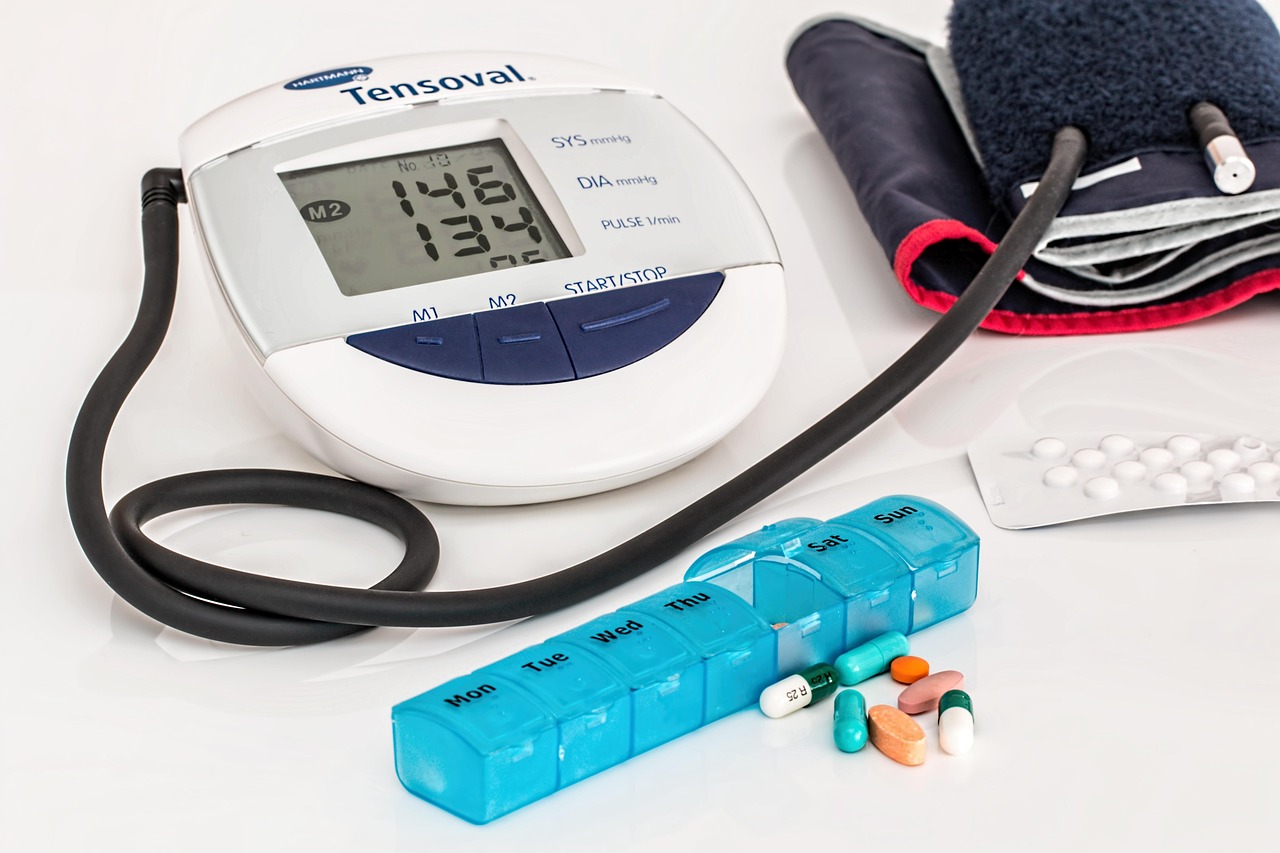


Medication adherence remains one of healthcare’s most persistent challenges, with millions of patients struggling to follow prescribed treatment plans. This article compiles practical, evidence-based strategies gathered from leading clinicians and adherence specialists who have tested unconventional methods in real-world settings. These twelve approaches move beyond standard reminders to address the behavioral, emotional, and logistical barriers that prevent patients from taking their medications as directed.
- Replace Reminders with Weekly Commitments
- Offer a Short Treatment Trial
- Show Personal Cost Projections
- Apply Values-Based Cognitive Strategies
- Anchor Doses to Daily Routines
- Schedule Milestone Follow-Ups
- Send Gap-Triggered Refill Nudges
- Leverage Anonymous Group Accountability
- Use Two-Person Read-Back Proof
- Pair Pills with Ice Sessions
- Link Medication to Legal Evidence
- Invite Outcome-Focused Conversations
Replace Reminders with Weekly Commitments
One unconventional method we used to improve medication adherence was removing reminders altogether. A provider came to us because adherence remained low despite reminders firing on schedule within the platform. Alerts went out. Patients received them. Nothing changed.
What we observed was not forgetfulness but disengagement. The thing is, repeated reminders lose meaning and blend into background noise. Clinicians felt the same stall as with no progress; adherence conversations kept restarting, with zero momentum. The turning point came when we removed reminders and introduced a weekly commitment step process. Patients started choosing when and where to take their medication and recorded a reason tied to a personal goal. The system then reflected that commitment back through brief feedback moments connected to clinical trends already in the record.
The method was successful because it changed how progress was experienced. Over six months, refill-based adherence increased from about 62 percent to 81 percent among users who stayed engaged. What we learned was simple. Adherence improves when people see evidence of follow-through, not when they are reminded to comply.

Offer a Short Treatment Trial
I stopped prescribing open-endedly. Instead I frame it as a trial—”let’s do 6 weeks and see how your body responds, then we decide together.” That one shift changed everything.
People resist medication partly because forever feels heavy. A defined trial feels manageable. Most of them come back, the numbers are better, and now they want to continue rather than feeling like I pushed them into it. Adherence is a psychological problem as much as a medical one.

Show Personal Cost Projections
As a former Medical Director at the Massachusetts General Hospital Pain Center and Harvard faculty, I have managed thousands of chronic pain cases where adherence to medications like Lyrica (pregabalin) is the primary barrier to avoiding surgery.
The most unconventional method I’ve used involves showing patients their own Medical Cost Projection to visualize the literal dollar value of “failed” conservative care. In one case involving a complex back injury, a patient’s adherence reached 100% only after they saw that staying on their regimen was the key to avoiding a projected $150,000 future spinal fusion.
I learned that translating medical instructions into a line-item financial liability transforms the medication from a “chore” into a critical asset the patient is eager to protect. Using these defensible future cost assessments provides a psychological “bottom line” that traditional medical advice often lacks.

Apply Values-Based Cognitive Strategies
As a clinical psychologist and founder of MVS Psychology Group, I specialize in helping clients navigate complex “Adjustment” periods where medication is often the critical “glue” for stability. My work focuses on evidence-based methodologies like Acceptance and Commitment Therapy (ACT) to bridge the gap between clinical intent and daily habit.
I use Cognitive Defusion to help clients separate their identity from the resistant thoughts that lead to missed doses. By labeling the urge to skip as “just a thought” rather than a command, clients create the psychological distance needed to act in alignment with their long-term health values despite how they feel in the moment.
One client used a Visual Action-Meaning Map to link their ADHD medication to the specific value of “being a present parent.” This shifted the daily dose from a chore into a functional tool for empowerment, which significantly increased their adherence and reduced the “fatigue” often associated with long-term treatment.
I’ve learned that adherence is a psychological adjustment rather than a logistical hurdle. When we focus on “Meaning” and “Flow” instead of just “Control,” clients stop fighting the process and start using it to build a more fulfilling, resilient life.

Anchor Doses to Daily Routines
Family Med doc here with almost 20 years of clinical experience. My advice to patients is to connect their medication timings to another daily routine activity. For instance, put your morning and evening medications near your toothbrush. We know we will do that twice a day. Seeing the bottles sitting there will be a reliable reminder.
Patients report that this has been incredibly successful in increasing their medication adherence. What I’ve learned is that most patients want to be compliant but need practical tips on how to stay consistent.

Schedule Milestone Follow-Ups
One approach I’ve found surprisingly effective for improving medication adherence is something I call “milestone check-ins.” Instead of just handing a patient a prescription and expecting them to follow it, I ask them to come back or call in at a specific point in their recovery, not because something is wrong, but just to check how they’re doing. It creates a sense of accountability without making the patient feel watched. For orthopedic patients especially, whether they’re recovering from a fracture, a joint replacement, or a deformity correction procedure, missing doses of anti-inflammatory medication or calcium supplements can quietly slow down bone healing. According to a study published in the Annals of Internal Medicine, poor medication adherence contributes to nearly 125,000 deaths annually in the US and accounts for 10% to 25% of hospitalizations, a reminder of just how much it matters.
What I’ve learned from this is that patients don’t skip medication because they don’t care. They skip it because life gets busy, or because they feel a little better and assume they no longer need it. When I explain the “why” behind each medication in plain language—for example, telling a patient that calcium and Vitamin D aren’t optional extras but are essential for bone healing after surgery—they take it more seriously. That one conversation, done with genuine care rather than a rushed prescription pad, often makes all the difference. Making patients feel like partners in their own recovery, rather than passive recipients of treatment, is the most unconventional yet most effective thing I’ve done.

Send Gap-Triggered Refill Nudges
I am a board certified dermatologist and Mohs and laser surgeon in New York, and I watch medication adherence up close every week. The unconventional tactic I have used is a refill gap trigger. We only nudge you when the pharmacy data shows you are late, not every day. A large pragmatic trial tested this style of texting, including behavioral nudges and a fixed chatbot, in 9,501 patients. Overall adherence hovered around 60%. The messages did not lift adherence at 12 months.
In our clinic, I saw a real short term bump. Patients refilled sooner, then the effect faded. That matches the study’s early signal. Refill adherence ran about 5 percentage points higher at 3 months, and the initial refill gap dropped by about 5 days. I learned something simple. The reminder has to evolve, or your brain tunes it out.

Leverage Anonymous Group Accountability
At Software House, we built a medication adherence app for a pharmacy chain serving 12,000 patients with chronic conditions. The most unconventional method that dramatically improved adherence was gamification tied to social accountability.
Traditional reminder-based approaches like push notifications had already been tried with marginal improvement. Patients would simply dismiss notifications the same way they ignore most phone alerts.
What worked was creating a system where patients could opt into anonymous adherence groups of 5 to 8 people with similar conditions. Each group member could see a dashboard showing whether their group mates had logged their medication that day, represented as simple green or grey dots with no personal health information shared. The social pressure was subtle but powerful. Nobody wanted to be the grey dot.
We also added a streak mechanism where groups that maintained 100 percent adherence for 30 consecutive days earned a small reward like a pharmacy discount voucher.
Among the 2,400 patients who opted into the social accountability feature, medication adherence rates increased from 62 percent to 89 percent over six months. The control group using standard reminders only improved from 62 to 68 percent.
What I learned was that medication non-adherence is rarely a memory problem. Most patients know they should take their medication. The real barrier is motivation and the feeling that nobody notices or cares whether they do. The social component addressed that emotional gap in a way that technology-only solutions cannot.
The pharmacy chain reported that hospital readmission rates among the participating group dropped by 31 percent, which more than justified the development cost of the platform.

Use Two-Person Read-Back Proof
I’m a trial lawyer in Maine who lives in the “what happened after the prescription?” part of the story—wrong meds/wrong doses, delayed diagnosis, and the paper trail that proves it. The most unconventional adherence booster I’ve seen work is a “two-person read-back + photo proof” routine at home, modeled after hospital-style medication reconciliation.
Example: a family I worked with used a shared group text where the patient read the label out loud (“drug, dose, timing”), the caregiver replied “confirmed,” and they snapped a photo of the pill in-hand next to the bottle before swallowing. It cut their missed/doubled doses fast because it killed the two biggest adherence failures I see in records: confusion during transitions (new med/new dose) and “I already took it” uncertainty.
It was also protective when something went sideways: if a provider later claimed the instructions were clear, the thread showed exactly what was dispensed and when it was taken. What I learned is adherence improves when you treat meds like a safety-critical checklist, not a willpower task—and the same documentation that helps health outcomes also becomes high-quality evidence if negligence (or a pharmacy fill error) is involved.

Pair Pills with Ice Sessions
As a hip and knee replacement surgeon with thousands of procedures at BONE DRs’ Central Texas clinics, I’ve managed post-op med adherence in complex patients to prevent pain spikes and swelling.
One unconventional method: “Ice-dose syncing,” where patients take prescribed anti-inflammatories (like ibuprofen) immediately before each 15-20 minute ice pack session from our RICE protocol.
In a Bastrop patient after robotic total hip replacement, this boosted self-reported adherence from 60% to 95% over two weeks, cutting swelling by half and speeding PT progress. I learned habits tied to physical sensations stick better than alarms alone.

Link Medication to Legal Evidence
With over 35 years litigating workers’ compensation claims in Illinois, I’ve seen medication non-adherence tank cases when insurers spot gaps in records. One unconventional tactic: “claim-linked photo logs,” where clients snap timestamped pics of each dose tied to a daily symptom journal, framing meds as direct evidence for their settlement.
In a recent case, a construction worker skipping pain meds after a fall improved from erratic compliance to 100% over six months; this airtight documentation flipped an insurance denial into a $1.2 million settlement.
I learned that adherence soars when patients view meds as “ammo” for their claim rather than a chore—turning legal strategy into personal motivation reduced lapses by 80% across similar clients.

Invite Outcome-Focused Conversations
One unconventional method I’ve used to improve medication adherence is incorporating simple patient-reported outcome check-ins into routine care, rather than relying solely on traditional reminders. Instead of just asking whether patients are taking their medications, I ask how they feel after taking them and what challenges they’re facing in real life. This small change often helps patients speak more openly about issues like side effects, forgetting doses, or daily routine challenges that they might not have mentioned otherwise.
What I’ve learned is that adherence improves when patients feel heard rather than monitored. When care becomes collaborative instead of directive, patients are more likely to stay engaged and consistent with treatment. Studies from the World Health Organization reinforces that patient-centered approaches significantly improve long-term adherence and health outcomes, especially when emotional and practical barriers are addressed early.