

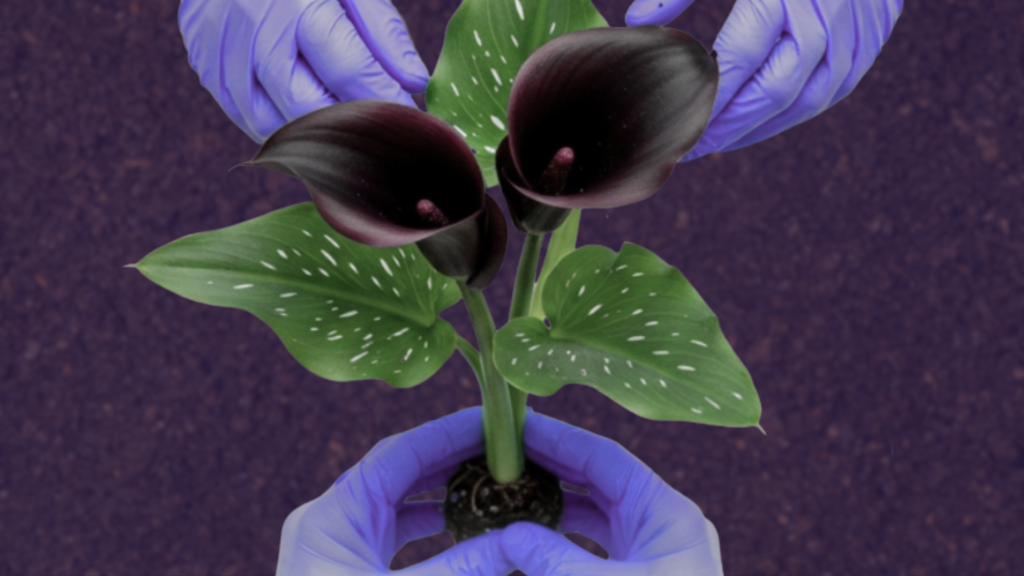
In the hills outside Jerusalem, a plant called the black calla lily has been used as folk medicine since at least the 9th century AD. Middle Eastern medical writings from that period document its use for cancer and other conditions, and recent surveys indicate it remains the most commonly used herbal medicine among regional cancer patients. Today, after centuries of being brewed at home as a tea, the plant is the subject of an FDA-regulated cancer drug trial running at a major U.S. oncology center.
That kind of story is becoming more common. For most of the 20th century, the pharmaceutical industry treated botanical medicine with the kind of polite skepticism reserved for things one’s grandmother believed in. Twentieth-century drug discovery favored synthetic chemistry. The single-molecule drug, manufactured to identical specifications batch after batch, became the industry standard. Plant-derived compounds were considered relics of a less rigorous era, occasionally useful as starting materials but rarely as final products.
That position is shifting. Several converging trends are pulling botanical drug discovery back into the mainstream, and a small number of clinical-stage companies are quietly building programs around plants that traditional medicine has used for centuries. The question is not whether plant-based drugs will return to the cancer pipeline. They already have. The question is what changed.
What the Pharma Industry Forgot
Today’s medicine has more plant-based drugs in it than most people realize. Aspirin traces back to willow bark. Morphine and codeine come from the opium poppy. Digoxin comes from foxglove. Taxol, one of the most successful cancer drugs of the past three decades, comes from the bark of the Pacific yew. Vincristine and vinblastine, both important leukemia treatments, come from the Madagascar periwinkle. Artemisinin, the malaria drug that won its developer the 2015 Nobel Prize in Medicine, comes from sweet wormwood, a plant used in Chinese medicine for over 1,600 years.
These are not edge cases. They are foundational drugs in oncology, anesthesiology, and infectious disease. What they share is an origin: someone noticed that a plant did something interesting, and chemistry isolated the molecule responsible.
For roughly thirty years between 1985 and 2015, this kind of discovery fell out of fashion. Combinatorial chemistry promised to generate millions of new compounds quickly. High-throughput screening promised to test those compounds against well-characterized molecular targets. The industry pivoted toward purely synthetic approaches, and botanical drug discovery slowed dramatically.
The pivot did not fully deliver. Despite the massive expansion of synthetic compound libraries, drug approval rates did not increase proportionally. According to the National Institutes of Health, 80 to 90 percent of research projects still fail before human trials, and 95 percent of compounds that reach human testing still fail in clinical development.
What Is Bringing It Back
Several developments are changing the math.
The first is analytical chemistry. Mass spectrometry, nuclear magnetic resonance, and other techniques have advanced to the point where the active compounds in a complex plant extract can be identified, quantified, and synthesized at a level that was impractical thirty years ago. A plant with hundreds of secondary metabolites can be characterized in days rather than years.
The second is the rise of phenotypic drug discovery. For three decades, the dominant approach was target-based: identify a protein involved in disease, design a molecule that binds to it, see what happens. Phenotypic discovery inverts this. Identify a compound that produces a desired effect on cells or organisms, then work backward to figure out why. This approach is naturally more receptive to botanical starting points, where the effect is often known long before the mechanism.
The third is the FDA’s evolving stance. In 2016, the agency updated its Botanical Drug Development Guidance for Industry, which provides a regulatory pathway for plant-derived drugs that does not require isolation of a single active ingredient. Two botanical drugs have been approved in the United States under this framework, Veregen and Mytesi, and several others are in clinical development.
The fourth is the industry’s increasing comfort with combination therapy. Contemporary oncology routinely uses three- and four-drug regimens. A botanical mixture that produces a useful effect through multiple compounds working together is, conceptually, just another combination. The intellectual barrier that once made polyherbal compounds suspect has eroded.
What It Looks Like in Practice
One company applying this playbook in clinical-stage cancer development is NextGen Scientific, based in Sterling, Kansas. NextGen’s pharmaceutical program is built around a plant called Arum palaestinum, used in Middle Eastern medicine since the 9th century AD.
NextGen’s medicinal chemistry team identified specific naturally occurring molecules in the plant that show preclinical anti-cancer activity, then synthesized those molecules in defined ratios to create a precise formulation called GZ17-6.02. The drug completed its Phase 1 trial in patients with advanced solid tumors and lymphoma, with results published in Annals of Oncology in 2021.
GZ17-6.02 has since moved into a Phase 1b trial sponsored by Virginia Commonwealth University. The single-arm study tests whether the drug slows castration-resistant prostate cancer in men whose disease has progressed despite hormone treatment, and every participant receives GZ17-6.02. The trial was registered in 2024 and is ongoing.
The mechanism is unusual. GZ17-6.02 functions as a super-enhancer modulator, acting on regulatory genes that control how other genes turn on and off across the cellular machinery. Most cancer drugs target a single protein. This one acts further upstream, which is why preclinical and Phase 1 data have shown activity across eight tumor types, including breast, prostate, colorectal, lung, head and neck, brain, and skin cancers.
Research collaborations on the compound include academic groups at Virginia Commonwealth University, Duke University School of Medicine, and Johns Hopkins. Peer-reviewed papers on the compound’s mechanism have appeared in Nature Scientific Reports, Oncotarget, JID Innovations, and the International Journal of Molecular Sciences.
A topical formulation of the same active compounds, GZ21T, is in development for actinic keratosis, a precancerous skin condition caused by sun damage. Preclinical data on the topical formulation has been published in JID Innovations.
What Is Coming Next
For investors and healthcare leaders watching the cancer drug pipeline, the return of botanical drug discovery is worth understanding. The pharmaceutical industry’s historical bias against plant-derived compounds was always weaker than the rhetoric suggested. It was a function of the discovery technology available at the time and the commercial preference for patentable single molecules.
Both of those constraints have softened. The technology now exists to characterize botanical drugs with the same precision as synthetic ones. The regulatory pathway exists to approve them. The combination therapy paradigm welcomes polypharmacology. And the patient population has been increasingly vocal about wanting drugs that come from somewhere recognizable rather than from a synthesis they cannot pronounce.
The next decade is likely to see more clinical-stage programs built around plants that have been hiding in plain sight for centuries. Some will fail, as most drug candidates do. The ones that succeed will not be returning to a forgotten approach. They will be applying modern science to an old observation: people figured out a long time ago that certain plants did certain things, and the chemistry that explains why is finally catching up.