
Mission Bio, the single-cell multiomics company, said Merck & Co. and Incyte will each present new data generated with its Tapestri Platform at the 16th World Clinical Biomarkers & Companion Diagnostics Summit, known as World CDx. Mission Bio will add a third presentation with new clinical data in acute myeloid leukemia (AML), according to a Mission Bio press release.
Together, the company said, the three talks show single-cell multiomics in use from early-stage target validation through clinical mechanism-of-action studies and measurable residual disease (MRD) assessment.
Merck Links CRISPR Edits to Cell Function
Sydney Hart, PhD, a scientist at Merck, will present new functional genomics findings on October 8, 2026, at 12:20 PM ET. Hart partnered with Mission Bio’s Assay Services team to build a targeted DNA and RNA single-cell assay on the Tapestri Platform.
The assay studies how CRISPR-edited genetic variants affect immune cell function in autoimmune and inflammatory disease. According to the release, Merck evaluated several single-cell platforms and selected Tapestri for its ability to capture targeted genomic and transcriptional information from the same cell while preserving cell yield.
The company said the work confirmed expected disease effects and established a mechanistic link for target validation to improve drug development decisions.
Incyte Tracks a Targeted Therapy With Single-Cell Multiomics
Incyte’s Erin Crowgey, PhD, Director of Translational Medicine, will present new single-cell clinical data on October 8 at 11:30 AM ET. The data cover INCA033989, a monoclonal antibody that targets mutant calreticulin (CALR)-positive cells in essential thrombocythemia and myelofibrosis.
Both conditions are disease subtypes of myeloproliferative neoplasms. The data came from a custom Tapestri assay, designed by Mission Bio’s Assay Services, that measures 46 proteins and 37 genes in the same cell.
According to the release, the single-cell analysis showed depletion of mutant CALR-positive cells and repopulation by wild-type cells, with relevant clinical improvements. The company said this illustrates how single-cell multiomics can track target cell populations and their responses to therapy in the clinic.
Mission Bio Reports AML Residual Disease Data
Mission Bio’s Chief Medical Officer, Dr. Zivjena Vucetic, will present on October 7 at 2:10 PM ET. The talk addresses limitations of standard-of-care AML MRD assays, such as bulk NGS and flow cytometry.
Vucetic will present clinical study data showing that single-cell multiomics achieved 93% sensitivity. That compares with 43% for flow cytometry and 71% for other molecular methods, according to the company.
The company said additional evidence will support that single-cell MRD profiling provides more accurate stratification of relapse-free survival in AML patient samples.
How Tapestri Differs From Bulk Methods
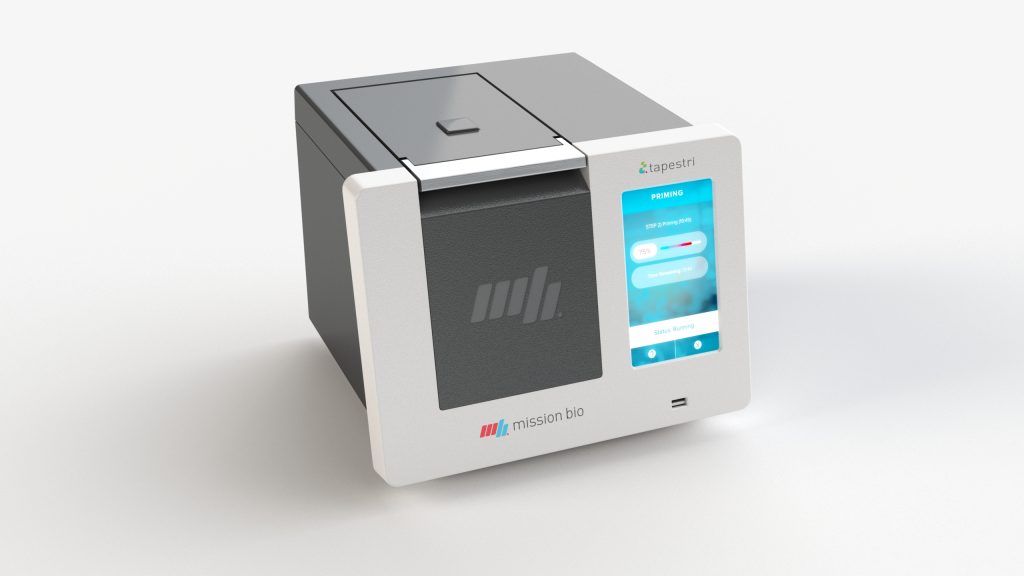
Mission Bio describes itself as the single-cell multiomics leader. The company says its Tapestri Platform offers a level of granularity and precision that is critical for complex research areas such as cancer studies, pharmaceutical development, and advanced cell and gene therapies.
According to the company, researchers use Tapestri to identify rare cell populations, understand mechanisms of therapeutic resistance and response, and establish key quality metrics for next-generation medical treatments. Mission Bio says the platform is advancing the clinical utility of MRD monitoring in diseases like AML.
The Vucetic talk centers on that use. Standard methods include bulk sequencing, a market where Roche recently launched a new sequencer. Standard-of-care AML MRD assays face limits from complex clonal evolution and overlapping immunophenotypes, according to the release. For MRD monitoring, the company said, single-cell data offer evidence to better anticipate relapse.
What the Presentations Mean for Drug Development
Mission Bio said the talks reflect growing use of Tapestri and its Assay Services by pharmaceutical companies to answer pipeline-specific questions. In discovery, the company said, single-cell multiomics links genetic edits to their functional consequences. In the clinic, it characterizes how a targeted therapy acts on disease-driving cells.
All three talks are open to registered World CDx attendees. The Mission Bio presentation opens the schedule on October 7, followed by the Incyte and Merck sessions on October 8.