

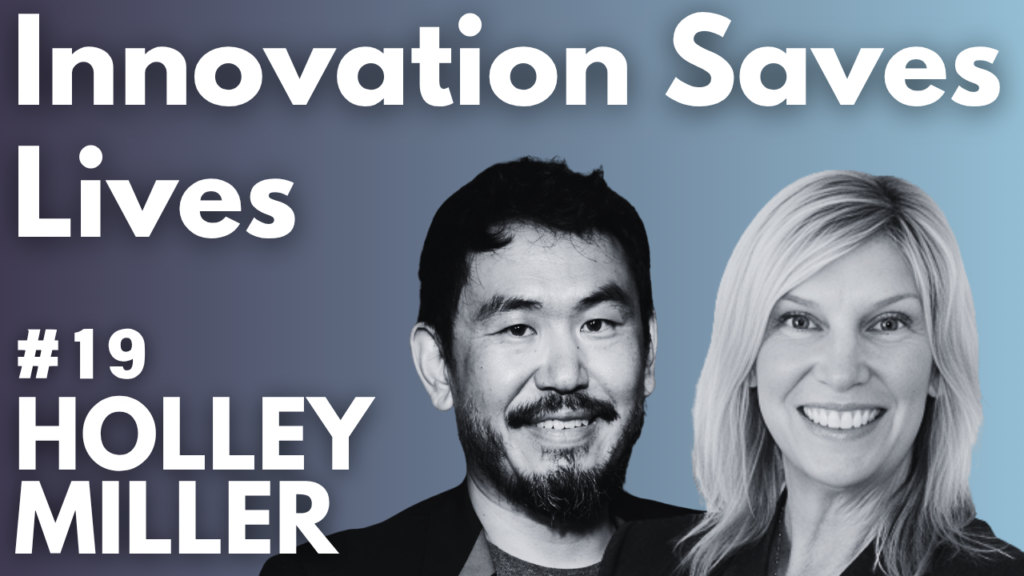
Holley Miller did not plan on building a career in life sciences marketing. She entered the field almost by accident, after applying for what she thought was a software company and discovering during the interview that it was the world’s first soft tissue surgical robotics company.
That moment changed the direction of her career. The company’s vision was radical for its time: using robotics to perform procedures that had previously depended entirely on the limits of the human hand. Today, surgical robotics is familiar in many operating rooms, but at the time, it required more than technical development. It required market education. Surgeons, hospitals, investors, and patients had to understand why a new way of doing things mattered.
That lesson became central to Miller’s work.
As Founder and President of Grey Matter Marketing, Miller helps healthcare and life sciences companies bring new products to market more effectively. Her perspective is shaped by a simple but often overlooked reality: innovation does not sell itself. A medical device, drug, diagnostic, or digital health platform may be impressive, but that does not mean people will change their behavior to use it.
That is why so many healthcare launches struggle.
Miller points to a common statistic in the industry: two out of three healthcare launches fail to meet first-year projections and often never catch up. For companies that have spent years developing technology, navigating FDA requirements, raising capital, and manufacturing a product, that failure can be surprising. From the inside, the innovation may feel obvious. From the market’s perspective, it may feel like a nice-to-have.
The difference usually comes down to the problem being solved.
Many companies lead with the technology itself, explaining what it does, how it works, and why it is advanced. But healthcare decision-making is rarely driven by technical novelty alone. Physicians, patients, hospitals, caregivers, and payers all need a reason to change what they already do. If the problem is not urgent enough, specific enough, and emotionally meaningful enough, even a strong product can fail to gain traction.
Miller’s framework is built around naming the problem, framing the solution, and claiming the category.
The first step is identifying the audience that feels the problem most acutely. A solution may technically apply to many people, but that does not mean all of them care equally. The best market entry point is often the group with the greatest emotional or practical need, because that is where behavior change is most likely to happen.
She gives the example of a migraine device designed as an alternative to medication. On the surface, many patients might benefit from a drug-free option, but not every patient has the same urgency. Pregnant women may care during pregnancy, but that need is often temporary. Parents of children with migraines, however, may feel a much stronger desire to avoid long-term medication, side effects, school disruption, and late-night emergencies. By focusing on that audience, the company was able to unlock stronger adoption and revenue growth.
That kind of insight is what many healthcare companies miss.
The decision-maker is not always the patient. In prostate cancer, spouses may drive research and appointments. In geriatric care, adult daughters may be the ones navigating doctors, appointments, and treatment options. In pediatric care, parents may feel a level of urgency they would not feel for themselves. Understanding who actually pushes the decision forward can completely change the marketing strategy.
For Miller, this is why healthcare marketing must go deeper than demographics.
It needs to understand fear, frustration, hope, urgency, and the emotional cost of the status quo. People may justify decisions with data, but they often respond first to a vision of what could change. A company’s job is not simply to explain the product. It is to help the right audience see why the current way no longer has to be accepted.
That perspective also shapes Miller’s view of innovation more broadly.
She argues that companies should focus on being different, not merely better. A product that is faster, cheaper, or slightly improved may still end up fighting for market share in an existing category. A product that reframes the problem has a better chance of becoming the new standard. That is especially important in healthcare, where one dominant company often controls a category and everyone else competes for what is left.
The healthcare landscape is also becoming more complex.
Hospitals are consolidating, payers are influencing where procedures happen, providers have less autonomy than they once did, and data is becoming increasingly central to care delivery. Robotics, wearables, continuous monitoring, autonomous systems, patient navigation, and AI-enabled workflows are all changing how healthcare companies think about value.
Miller sees opportunity in that change, but also a challenge.
There is no shortage of innovation. The harder question is how to get innovation adopted inside a health system that is complex, risk-averse, and often slow to change. That requires more than a launch campaign. It requires a commercial strategy rooted in the audience’s real experience.
Her final advice is direct: people do not care what a company makes as much as they care what it makes happen.
That may be the clearest lesson from Miller’s career. In healthcare, the product is only part of the story. The real value is the outcome it creates, the behavior it changes, and the future it helps people imagine.
Want more Innovation Saves Lives? Check out the articles or head over to Apple Podcasts.