
Dr. Omar Marar remembers a time when the standard of care in colorectal surgery meant large incisions, extended hospital stays, and recovery timelines measured in weeks as opposed to days. He is candid about how thoroughly that picture has changed. Robotic-assisted surgery has refined the technical execution of colorectal procedures and redrawn the boundaries of what surgeons can accomplish and what patients can reasonably expect when they leave the operating room.
In Phoenix and at institutions across the country, the robotic platform has become less a novelty and more a baseline expectation for complex colorectal work, and the evolution shows no signs of slowing. That evolution is worth understanding carefully, because the enthusiasm surrounding surgical robotics sometimes outruns the evidence, and the field deserves rigorous scrutiny alongside its celebration.
What the accumulated clinical data now supports across thousands of cases and multiple peer-reviewed analyses is that robotic-assisted colorectal surgery, in appropriately selected patients and in the hands of well-trained surgeons, delivers measurable improvements in specific outcomes.
These include reduced blood loss, lower conversion rates to open surgery, shorter length of hospital stay, and in rectal surgery particularly, superior preservation of the autonomic nerves governing bladder and sexual function. For patients whose lives are already disrupted by a colorectal diagnosis, they represent meaningful differences in how colorectal surgery affects their long-term quality of life.
The Technical Advantages That Translate to Clinical Benefit
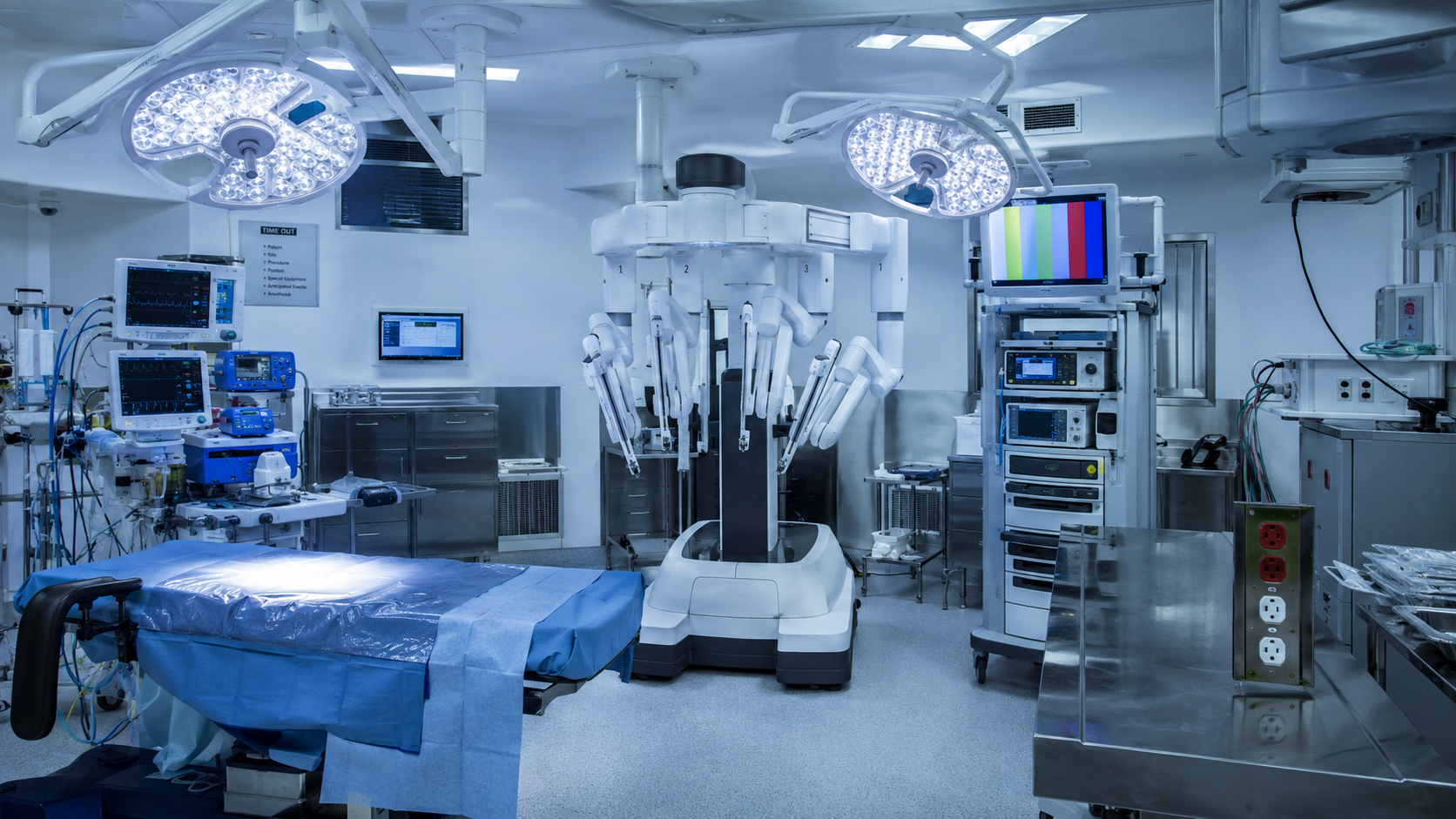
Understanding why robotic surgery produces better outcomes in certain colorectal procedures requires understanding what the platform actually does differently. The robotic system provides the operating surgeon with a three-dimensional, high-definition view of the operative field. Instruments articulate with seven degrees of freedom, replicating and in some respects exceeding the natural range of motion of the human hand while simultaneously filtering the involuntary tremor that every surgeon carries into the operating room regardless of skill level.
In colorectal surgery, these technical advantages matter most in anatomically constrained environments. The pelvis, in particular, presents challenges that have historically made rectal dissection one of the most technically demanding operations in abdominal surgery. Narrow operative corridors, proximity to critical neurovascular structures, and the need to achieve precise oncologic dissection planes while protecting surrounding organs all demand a degree of instrument control that the robotic platform provides with a consistency that conventional laparoscopy cannot fully match.
“The pelvis is an unforgiving space,” Dr. Marar explains. “The margin between a clean oncologic dissection and an inadvertent injury to the pelvic nerves is narrow, and the consequences of getting it wrong are significant for the patient’s cancer control and for their quality of life afterward. The robotic platform gives you the precision to work in that environment with a level of confidence that changes what’s achievable.”
Rectal Cancer Surgery and the Preservation of Function
Nowhere is the impact of robotic-assisted surgery more consequential than in the treatment of rectal cancer, where the proximity of the tumor to the anal sphincter complex has historically created a painful trade-off between oncologic thoroughness and functional preservation. Total mesorectal excision requires dissection along precise anatomical planes that, when executed correctly, remove the tumor with an intact mesorectal envelope while sparing the autonomic nerves that control urinary and sexual function.
When that dissection is incomplete or imprecise, the oncologic and functional consequences are both serious. Robotic assistance has demonstrably improved the quality of total mesorectal excision in the hands of trained surgeons, with studies showing higher rates of complete mesorectal excision, lower circumferential resection margin positivity, and reduced rates of conversion to open surgery compared to conventional laparoscopic approaches.
For patients with low rectal tumors, historically among the most challenging cases in colorectal surgery, the robotic platform has expanded the pool of candidates who can safely undergo sphincter-preserving operations instead of permanent colostomy. That is a quality-of-life distinction that patients and their families feel every day.
“Sphincter preservation is about what a patient’s daily life looks like five years after their operation. When we can achieve that preservation without compromising the oncologic integrity of what we’ve done, that’s the outcome we’re all working toward. The robotic platform makes that achievable in cases where it previously wasn’t,” says Dr. Marar.
The long-term functional outcomes following robotic rectal surgery are areas of active research, and new data from prospective trials is broadly supportive of the platform’s advantages in carefully selected patients.
The Learning Curve, Training, and Democratizing Surgical Excellence
No honest assessment of robotic colorectal surgery’s future can avoid the question of training. The learning curve for robotic colorectal surgery is real, and the outcomes associated with the platform are not uniformly distributed across all surgeons and all institutions. Proficiency takes time, mentorship, and structured exposure to a sufficient range of case complexity.
Simulation platforms, proctored case experiences, and structured fellowship training in minimally invasive colorectal surgery all play roles in compressing the learning curve and establishing the technical foundation that safe robotic practice requires. The democratization of robotic surgical excellence depends on how seriously the field takes that educational infrastructure.
“The technology is only as good as the surgeon using it,” Dr. Marar observes. “What I care about in surgical education is building the foundation so that when a surgeon sits at a robotic console, they’re not just operating a machine. They’re making decisions that the machine helps them execute more precisely.”
What the Next Generation of Robotic Surgery Will Deliver
The robotic platforms currently in wide clinical use represent a significant but early iteration of what the technology will ultimately become. The next generation of surgical robotics incorporates capabilities that promise to further expand what colorectal surgeons can accomplish.
Haptic feedback systems, which restore a degree of tactile sensation currently absent from robotic surgery, are under active development and will address one of the platform’s most frequently cited limitations. AI-driven intraoperative analysis, augmented reality surgical overlays, and single-port robotic systems are already moving toward clinical use, and for Dr. Marar, the field’s most consequential contributions to patient outcomes are still ahead.
Dr. Omar Marar, MD, is a board-certified Colon and Rectal Surgeon at Valley Multi Specialty in Phoenix, Arizona. Fellowship-trained at Thomas Jefferson University Hospital, he specializes in colorectal cancer care, robotic-assisted minimally invasive surgery, and complex pelvic reconstruction, with a sustained commitment to surgical education and research excellence.
Disclaimer: The content in this article is for informational purposes only and does not constitute medical advice. Please consult a qualified healthcare professional for personalized guidance.