

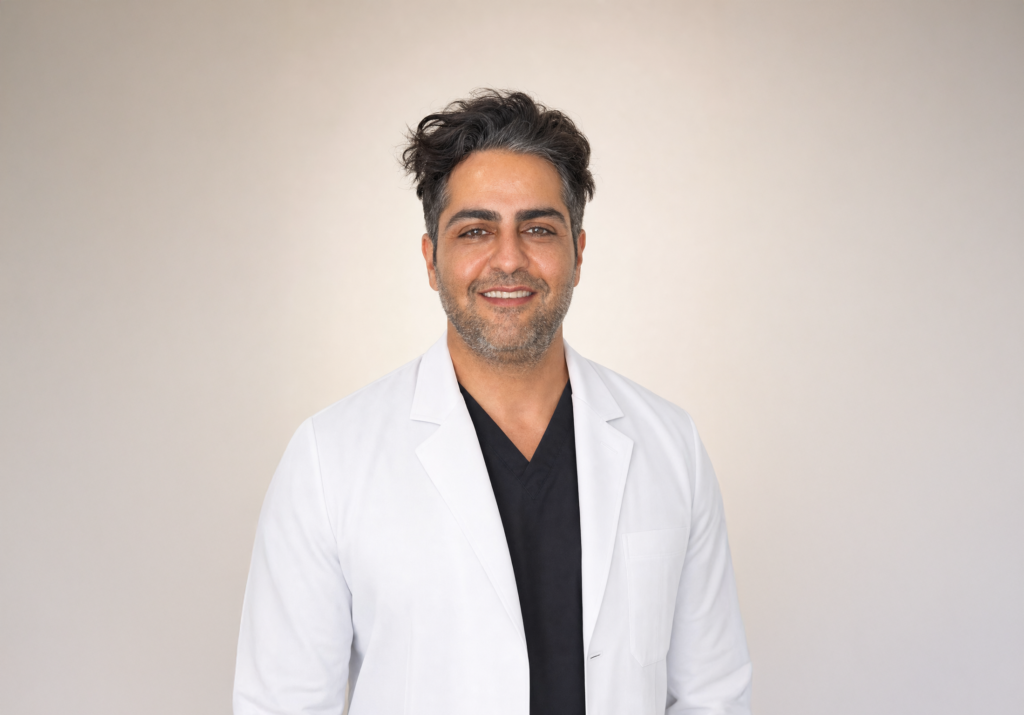
Healthcare has traditionally been built around treating illness after symptoms appear. Patients seek medical attention, physicians diagnose conditions, and treatment begins. But a growing interest in longevity medicine is challenging that familiar model, encouraging a more proactive relationship between individuals and their long-term health.
For Dr. Daniel Moghadam, Medical Director of EBO2 Therapy & Wellness, this shift reflects a philosophy shaped by more than a decade working in emergency rooms and trauma medicine.
After years of treating patients in critical situations, Moghadam began questioning why healthcare devoted so much attention to responding to illness rather than helping individuals become more engaged in their health before serious problems developed.
That experience now informs his approach to personalized wellness, emerging medical technologies, and the responsibilities physicians have when introducing patients to newer therapies.
Longevity Is About More Than Living Longer
The conversation surrounding longevity often focuses on extending the human lifespan. However, Moghadam believes the more meaningful objective is preserving the quality of those additional years.
“I don’t think the goal should ever be just to live as long as possible,” he explains. “You want to be able to enjoy those years, stay independent, spend time with your family, and continue doing the things you love.”
This perspective places preventive care, physical activity, nutrition, and routine medical screenings at the center of longevity medicine.
While new technologies continue to attract attention, Moghadam cautions against overlooking established practices that support long-term health.
The growing popularity of longevity medicine also reflects a change in patient expectations. Individuals increasingly want to understand their personal risk factors, participate in medical decisions, and explore strategies that align with their individual health goals.
For physicians, that means moving beyond standardized recommendations and developing a more collaborative approach to care.
Personalized Wellness Begins With Understanding the Patient
One of the central principles guiding Moghadam’s practice is that no two patients should automatically receive identical recommendations.
Medical history, medications, existing conditions, lifestyle, and personal goals all influence whether a particular wellness service may be appropriate.
At EBO2 Therapy & Wellness, the evaluation process includes reviewing medical history, assessing potential contraindications, conducting nursing assessments, checking vital signs, and consulting with a medical provider.
Additional evaluation may be necessary depending on the individual and the service being considered.
Importantly, not every consultation results in a recommendation for treatment.
“And sometimes the most responsible decision is to tell someone that a particular procedure isn’t right for them,” Moghadam says.
This emphasis on individualized screening reflects a broader principle of physician-supervised wellness: medical judgment should determine whether an intervention is appropriate, rather than patient demand or the popularity of a particular technology.
Emerging Wellness Technologies: Separating Innovation From Evidence
Advances in regenerative medicine, diagnostics, and emerging wellness technologies are creating new areas of medical investigation.
Moghadam is particularly interested in research involving peptides and regenerative approaches, although he emphasizes that promising scientific developments should not automatically be interpreted as established medical treatments.
“What concerns me is how quickly something can go from being an interesting area of research to being marketed as a proven treatment,” he explains.
That distinction is especially relevant as wellness consumers encounter increasingly ambitious claims surrounding anti-aging, emerging therapies, and cellular health.
Among the emerging approaches receiving attention are EBO2 therapy and EBO3 therapy.
EBO2, also known as EBOO, refers to extracorporeal blood oxygenation and ozonation. The procedure involves circulating blood outside the body through specialized equipment, exposing it to oxygen and ozone, and returning it to the patient.
EBO2 Therapy & Wellness also uses the term EBO3. Equipment and procedures may vary between providers, making it important for patients to understand precisely what is being offered.
However, Moghadam emphasizes a critical distinction: EBO2 and EBO3 are not FDA-approved treatments, and sufficient clinical evidence has not established their effectiveness or long-term safety for the wellness benefits sometimes associated with them.
The availability of a procedure in a clinical setting does not establish FDA approval or demonstrate that its advertised benefits are scientifically supported.
For Moghadam, transparent communication about these limitations is essential to responsible medical practice.
Why Physician Supervision and Patient Education Matter
As wellness treatments become increasingly accessible, physician involvement remains an important component of evaluating patient safety.
Some emerging interventions involve complex procedures and potential complications that may not be immediately apparent to consumers.
Moghadam believes physician supervision must extend beyond simply overseeing a procedure.
It involves evaluating medical histories, identifying contraindications, understanding potential risks, establishing appropriate protocols, and determining when a treatment should not be offered.
Patient education is equally important.
At EBO2 Therapy & Wellness, Moghadam describes an approach centered on explaining available research, discussing uncertainties, and encouraging patients to ask questions before making decisions.
He believes patients should understand not only what a therapy involves, but also what remains unknown about its potential benefits and risks.
This distinction is particularly important in an industry where marketing language can sometimes move faster than scientific research.
A newer technology is not necessarily a better technology, and a treatment being available does not mean its effectiveness has been demonstrated.
Building a More Responsible Future for Longevity Medicine
Looking ahead, Moghadam anticipates continued developments in regenerative medicine, diagnostic capabilities, and individualized approaches to healthcare.
Some emerging therapies may eventually gain sufficient scientific support to become established medical interventions. Others may fail to demonstrate meaningful benefits as additional research becomes available.
That uncertainty, he believes, is an unavoidable part of medical progress.
For EBO2 Therapy & Wellness, the guiding philosophy is to approach personalized care through patient evaluation, physician oversight, and transparent discussions about treatment limitations.
Ultimately, Moghadam sees the future of longevity medicine as something larger than any individual technology.
The opportunity lies in creating a healthcare environment where patients are better informed, physicians remain accountable to scientific evidence, and decisions reflect each individual’s needs.
Technology may continue to change what medicine can offer, but the principles guiding responsible care should remain constant.
As Moghadam explains, the foundation of good medicine is listening to patients, evaluating the evidence, and making decisions based on what is appropriate for each individual.
For a field increasingly defined by innovation, that commitment may prove to be its most important advancement.