
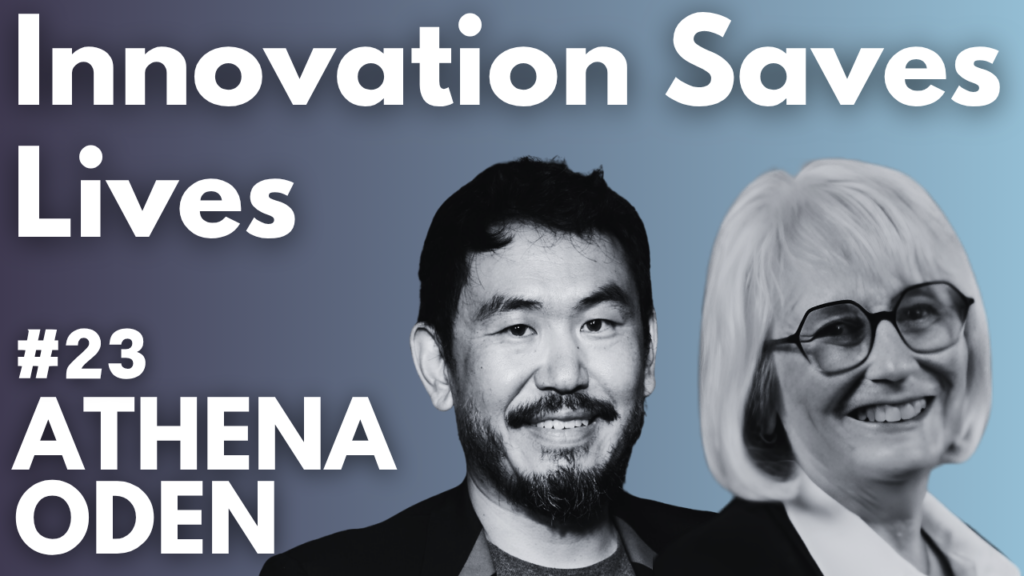
Athena Oden’s path to pediatric physical therapy began when she was 15 and survived a devastating car accident involving a train. She underwent brain surgery, while her mother suffered serious injuries to her back and hips. Physical therapists became an important part of their recovery, introducing Oden to a profession that combined her interest in medicine with something else she already loved: working with children.
More than 40 years later, Oden has built a career around an idea that sounds simple but has significant implications for education. Children don’t develop their minds separately from their bodies. Movement and sensory experiences help create the foundation upon which learning depends.
That belief eventually led her to found Ready Bodies, Learning Minds and develop a curriculum designed to bring those foundations back into schools.
When One Therapist Had to Reach Hundreds of Children
Early in her career, Oden worked in an enormous rural school district. She was responsible for roughly 80 children across a dozen campuses spread over 600 to 700 square miles, with only three working days each week to reach them.
It quickly became obvious that she couldn’t personally provide enough hands-on therapy to every child who needed support. Her solution was to transfer more of what she knew to teachers and schools.
Oden began developing activities educators could use without having a physical therapist constantly present. Over time, those efforts evolved into a broader curriculum containing dozens of activities and a concept she describes as a motor sensory lab.
Much like students might visit a computer or science lab, the idea is to give children a dedicated environment for developing the physical and sensory systems that support classroom performance.
Learning Doesn’t Happen From the Neck Up
Oden argues that education has historically treated movement as something adjacent to learning. A child might get a “brain break,” recess period, or physical education class before returning to what adults consider the real academic work.
She sees the relationship differently. Movement isn’t merely a break from learning. It is part of how learning becomes possible.
Consider something as basic as communicating an idea. Speaking requires coordinated oral motor skills. Handwriting requires control of the hand and arm. Typing requires movement of the fingers. Even using eye gaze to operate an assistive communication system depends upon motor control.
Oden points to the concept of embodied cognition, which examines the relationship between the body, environment, perception, and thought. Memories and concepts can be deeply connected to sensory experiences. The smell of freshly baked bread, for example, can summon a vivid memory without someone consciously retrieving an abstract definition of bread.
For children, that connection makes physical experience especially important.
The Senses We Don’t Talk About Enough
Children are commonly taught about sight, hearing, smell, taste, and touch. Oden says that picture is incomplete when considering development.
She also emphasizes the vestibular system, which contributes to balance and spatial orientation, and proprioception, which helps someone understand where their body is positioned. Children traditionally exercised these systems through activities such as swinging, climbing, spinning, riding bicycles, and navigating unpredictable outdoor environments.
Many children now have fewer opportunities for that kind of play. At the same time, Oden says schools are asking them to perform seated academic tasks at younger ages.
That creates what she calls a “perfect storm.” Expectations for classroom performance have risen while some of the experiences that prepare children to meet those expectations have diminished.
Why Sitting Still Can Be the Wrong Starting Point
The consequences can appear behavioral. A child who constantly moves, falls out of a chair, struggles with handwriting, or has difficulty visually tracking text may look inattentive or disruptive.
Oden wants educators to ask another question before assuming the behavior itself is the problem: Does the child have the developmental foundation necessary for the task?
If a child’s balance and movement systems are still developing, demanding more sitting may not solve the problem. More purposeful movement may actually help build the capacity that eventually makes sitting and concentrating easier.
The same principle applies to handwriting. Rather than rushing young children toward pencils, Oden favors developing the underlying abilities first, including core stability, arm and hand control, balance, and vision.
Rethinking the Classroom Around Development
Oden isn’t simply calling for longer recess. She believes the structure of early education deserves a broader reconsideration.
A science lesson could happen in a garden before it happens in a textbook. Young children could spend more time learning from the floor rather than remaining in chairs. Older students could stand at a board and solve problems collaboratively instead of spending an entire lesson listening to a lecture.
Her concern becomes particularly sharp when behavioral differences turn into diagnostic assumptions. Oden stresses that ADHD is real, but questions whether every child who struggles to meet classroom expectations should automatically be viewed as having something wrong with them.
Instead, she wants parents, educators, therapists, and school leaders to examine the environment alongside the child.
That distinction sits at the heart of her work. If childhood has changed, education can’t assume the same developmental experiences are still happening somewhere else. Schools may need to deliberately restore opportunities for movement, sensory exploration, and physical development that children once encountered naturally.
For Oden, the question isn’t how to make every child better at sitting still. It’s whether we’ve built an environment that gives them what they need to learn in the first place.
Want more Innovation Saves Lives? Check out the articles or head over to Apple Podcasts.