

Recognizing progress matters more than most people realize, yet many professionals skip over small victories and move straight to the next deadline. This article shares practical ways to acknowledge incremental achievements, drawing on insights from workplace psychologists, productivity researchers, and team leaders who study how celebration affects motivation and mental well-being. The strategies that follow offer concrete methods to build momentum without adding complexity to already full schedules.
- Pause for a 60-Second Body Scan
- Sound a Party Horn for Success
- Credit the Difficulty, Not Just Results
- Say an Honest End-of-Day Prayer
- Collect Weekly Joy in a Junk Journal
- Name What Did Not Go Wrong
- Use the Product to Mark Milestones
- Record Evidence of Daily Follow-Through
- Find Customer Questions That Vanished
- Read Old Fears to See Progress
- Save Proof That Projects Move Forward
- Review Micro-Wins, Then Take a Break
- Rest After Each Goal
- Reward Small Wins With Your Team
- Conduct Weekly Reviews to Build Resilience
- Measure Retention and Share Client Praise
- Start Each Day With a Morning Walk
- Chart Content Momentum Beyond Metrics
- File Test Results and Share Lunch
- Compare Early Drafts With Final Work
- Praise Teams After Steady Operations
- Notice Work That Now Feels Easy
- Debrief Each Event Before You Critique
- List Completed Tasks Before You Log Off
- Track Controllable System Improvements
Pause for a 60-Second Body Scan
For most of my life, small wins didn’t count. Only the big ones did — the milestone, the launch, the moment something was finally finished. Everything in between was just… the work. Expected. Not worth stopping for.
What that created, quietly, was a life where nothing was ever enough. The finish line kept moving. I was productive and exhausted at the same time, and I couldn’t figure out why.
The shift started with something almost embarrassingly simple. Every morning, before I looked at my phone or opened anything, I’d name three things — not goals, not intentions, just things that were already true and good. Sometimes it was sleep. Sometimes it was a conversation from the day before that landed right. Sometimes it was just the coffee.
What I didn’t expect was how much that practice would change my relationship with my body. When you train yourself to notice what’s working, you start to feel it physically. The chest opens a little. The jaw unclenches. There’s a moment of — okay. This is something. I did something.
The shame piece surprised me most. Celebrating small wins isn’t really about the wins. It’s about interrupting the story that says you’re behind, that you haven’t done enough, that you have to earn the right to feel okay. That story does more damage than most people realize.
One thing that’s stayed with me: a 60-second body scan at the end of a finished task. Not a big production — just a breath, a quiet check-in, and an acknowledgment that something moved forward today. Even on the hard days, something moved forward.
That’s enough. It really is.

Sound a Party Horn for Success
For me, learning to celebrate small wins was not a wellness tip, but it was a hard-earned lesson that changed both my health and my leadership.
At one of the most stressful moments of my career, I took on a new leadership position and discovered unexpectedly that the company had lost its market leadership. I had to rebuild my team, restore confidence and regain our market position. We achieved that within two years.
But I made a crucial mistake: I knew how to work towards the next goal, but not how to stop and appreciate what we had already achieved. There was always another problem to solve, another milestone to reach. Eventually, my body forced me to stop. I became seriously ill.
I recovered through a holistic approach that included medical treatment, relaxation techniques and, importantly, learning to create moments of genuine joy and completion. Today, this is a central part of my work as a happiness coach: success needs a conscious emotional full stop.
One of my favourite ways to acknowledge progress is deliberately playful. Whenever my team achieved an important milestone, I would walk through the office, past everyone, to a small party horn—the kind used for birthdays—and blow it with all my strength. It was our first “joyful shout,” often followed by a spontaneous aperitif with the whole team.
It sounds silly. That is precisely why it works.
For a moment, even highly responsible adults get to behave like excited children. We laugh, celebrate and make the achievement tangible. Instead of immediately switching back into problem-solving mode, we create a psychological transition from “I have to achieve” to “I have achieved.”
That distinction matters. Celebrating progress interrupts the tendency to remain permanently focused on the next challenge. It creates positive experiences we can draw on later, especially when progress is slow, motivation is low or we face another demanding phase.
My own experience taught me that resilience is not only the ability to keep going. It is also the ability to pause, register progress and allow yourself to feel proud.
My simplest practice today is this: at the end of each day, I name one thing I accomplished and allow myself to enjoy it before asking, “What’s next?”
That small pause can change the emotional quality of achievement. And, over time, the way we relate to work, stress and ourselves.

Credit the Difficulty, Not Just Results
I am a licensed clinical psychologist, so I will answer this in the terms I actually think in rather than the motivational version.
Celebrating small wins works, but not for the reason it usually gets sold. It is not about being nicer to yourself. It is about repairing a broken feedback loop. Depression and burnout share a specific failure: effort stops registering as effort. You do things all day and the internal ledger records nothing, so the day reads as blank, and a run of blank days is most of what hopelessness is made of. Deliberately marking a small win is a manual write to that ledger.
The high achievers I see resist this hardest, because acknowledging something small feels like lowering the bar. What I point out is that they are already running an asymmetric system. Failures get logged in detail and successes get reclassified as baseline within about an hour of happening. That is not humility, it is a measurement error, and it renders a person’s own life data useless to them. You cannot assess whether you are getting better if only one category of evidence is being recorded.
The one practice I recommend, and the one I use in my own professional work, is to write down what was hard about what you did rather than what you achieved. “Sent the email” does nothing. “Sent the email I had been avoiding for nine days” lands, because the difficulty is precisely the part the brain refuses to credit. Effort acknowledgment beats outcome acknowledgment, and it holds up on the days when the outcome was not good, which are the days you most need the record.
One caution, because this framing gets misused. If someone is celebrating small wins to talk themselves out of a situation that genuinely has to change, an unsurvivable job or an untreated depression, that is not progress tracking. That is sedation. The practice exists to make accurate self-assessment possible, not to make a bad situation tolerable indefinitely.

Say an Honest End-of-Day Prayer
As a licensed counselor since 1997 working with trauma survivors and foster families, I’ve watched people dismiss their own progress because it doesn’t look dramatic enough. That dismissal quietly erodes resilience.
One pattern I see constantly: clients who’ve survived enormous pain—betrayal, loss, family rupture—finally sleep through the night or speak honestly to a loved one, and brush it off. I stop them there. That moment *is* the work. Naming it out loud in session makes it real and neurologically reinforces the new pattern.
What I personally use, and recommend, is a simple end-of-day honest prayer of acknowledgment—not gratitude performance, but genuine recognition. Something like: “God, I noticed I responded differently today.” That spiritual check-in keeps progress from slipping past unwitnessed.
The shift from surviving to thriving—something I write about directly—happens in these micro-moments of honest self-recognition, not in grand breakthroughs. If you only measure yourself against the finish line, you’ll feel perpetually behind. Measure against yesterday’s version of yourself instead.

Collect Weekly Joy in a Junk Journal
I make it a point to add one thing I’m grateful for weekly in my junk journal. This has helped me pay more attention to small joyful moments that might have seemed insignificant otherwise, and I keep small paraphernalia from these moments. Looking back on the collection of ephemera that I have accumulated over the week makes me more appreciative of my intentional efforts in caring for my mental health.

Name What Did Not Go Wrong
I write down the things that did not go wrong.
A founder’s week records itself as problems. The complaint, the equipment that failed, the person who left. Nothing writes down the four days where the schedule held, so the mental picture you carry is drawn entirely from the worst hour of each day, and it is not an honest picture.
So on a Friday I write one line, and the rule is that it has to name something that did not happen. Nobody stayed late. No result sat unreviewed. Nobody had to chase us. It takes a minute and it has done more for how I feel about this work than any wellbeing advice I have tried, because it is not positivity, it is a correction to a biased record.
The team version is the same sentence said out loud before we leave. I am wary of manufactured recognition, and we tried the monthly praise routine and it landed flat, so this stays small and specific.
The number I am proudest of is that nobody has left in 3 years, in a field where people leave constantly. I would not have noticed that from the inside without writing the quiet weeks down.

Use the Product to Mark Milestones
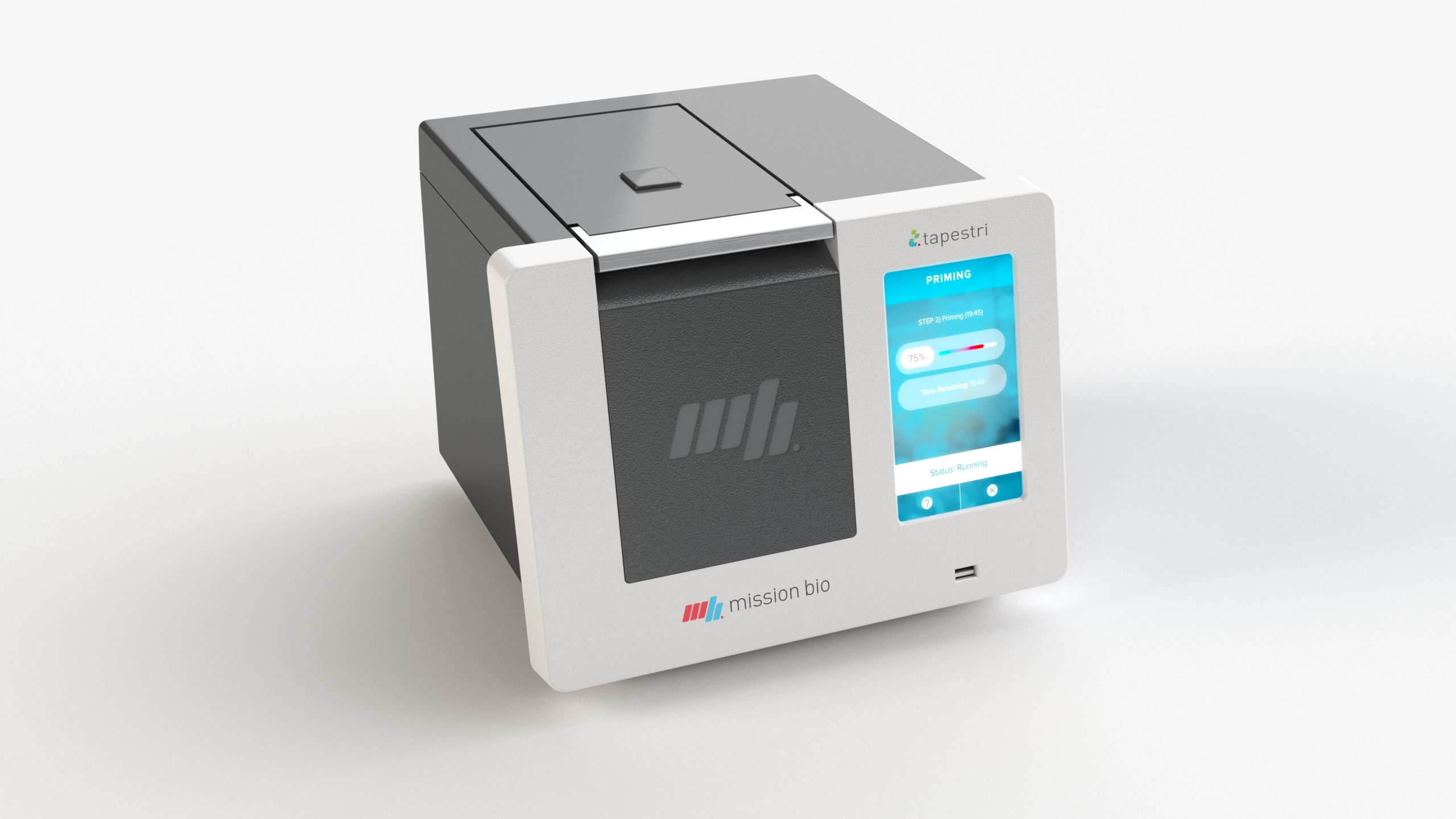
Building hardware teaches you this lesson whether you want to learn it or not. A physical product doesn’t move in dramatic leaps—it moves in a hundred small, unglamorous fixes: a component that finally fits right, a setup step that goes from five minutes to two. If your mental health is tied to the big launch moments only, you’re going to spend most of your time feeling like nothing’s happening, even when everything’s moving.
Learning to actually register the small wins changed that. It’s less about mood and more about accuracy—it corrects a distorted sense that progress isn’t real unless it’s dramatic, which is a pretty exhausting way to run a company.
One way we mark it: when the team hits a real milestone, even a small one, we stop and actually use the product together rather than just moving on to the next task. It sounds almost too on-the-nose given what we build, but it works precisely because it forces a pause—you can’t rush through twenty minutes of sound and light the way you can rush past a Slack message that says “nice work.” The acknowledgment has to take up real time or it doesn’t register as real.

Record Evidence of Daily Follow-Through
With 20+ years in fitness, therapeutic recreation, and brain health training, I’ve seen that celebrating small wins lowers the “all-or-nothing” pressure that keeps people stuck. Mentally, it shifts the question from “Am I fixed yet?” to “What did I follow through on today?”
One client returning after surgery couldn’t jump back into her old routine, so we celebrated showing up, moving safely, and listening to her body. That built confidence without shame, and confidence is often what gets people consistent again.
One way I acknowledge progress is by tracking “evidence,” not just outcomes. I’ll write down things like: “I walked even though I was tired,” “I chose a supported version,” or “I stopped before pain instead of pushing through.”
My favorite practical tool is a 30-second win journal after movement: one thing I did, one thing I noticed, one next step. It keeps progress connected to the spirit, mind, and body—not just the scale or a workout number.

Find Customer Questions That Vanished
The thing I had to learn is that in a small shop, progress is silent. Nothing announces itself. You notice the complaint, the courier failure and the stock that did not turn up, and you never notice the dozens of parcels that went out of the door exactly as they should have.
So the win I look for now is a problem that has stopped happening. Once a month I go through the support inbox hunting for the questions that have disappeared rather than the ones that arrived. It sounds like an odd thing to celebrate and it is the only measure of progress in this business that is honestly mine.
The one I remember is people asking whether a cable could be left plugged in through heavy rain. We used to get that message constantly, and it was never a product problem. It was a page that assumed everyone knew what a weather rating meant. We rewrote it in plain English, the question dropped by about 80% inside two months, and I only spotted it because I had started looking for absences.
For my own head, it has done more than any target ever did. Targets go up and then reset, and there is no rest in that. Removing a recurring problem is permanent. Nobody claps when a question stops arriving, and it is the part of the work I am most pleased with.

Read Old Fears to See Progress
I’ll be honest, “celebrate your small wins” always sounded a little soft to me, like a motivational poster. What changed my mind wasn’t the celebrating part. It was realizing the practice fixes an actual perception bug that ambitious people are cursed with: the goalpost moves the second you reach it.
You hit a target you’d have killed for a year ago, and within about a day it’s just the new normal. Invisible. “Of course.” Then you go right back to staring at the next gap ahead of you. So you can have a genuinely great year and experience it as a year of falling short, because your brain quietly deletes every win the instant it becomes routine. You’re always measuring the distance to where you’re going, never the distance from where you started.
The one thing that actually helped: I keep a running note of whatever felt hard or scary that week, not achievements exactly, just “this was the thing keeping me up.” And every so often I read the old entries. It’s startling. The crisis that owned me six months ago is something I now handle before lunch without a second thought. That’s the proof progress happened, held up against my own brain’s insistence that it didn’t.
The mental health impact was less about feeling good and more about seeing clearly. Success was real the whole time. I just couldn’t see it while facing forward. The fix isn’t a party. It’s turning around once in a while and looking at how far back the starting line is now.

Save Proof That Projects Move Forward
As a Webflow designer/developer and founder of Webyansh, I’ve learned that big projects can feel endless if you only celebrate the final launch. Small wins keep my mental health steadier because they turn “this is overwhelming” into “this part is moving.”
On Project Serotonin, the full website overhaul had pressure because the site needed to impress both investors and consumers. Celebrating smaller steps like locking the structure, improving performance decisions, or getting the CMS filtering working made the project feel manageable instead of mentally heavy.
One thing I do is keep a simple “progress evidence” habit. I save before/after screenshots, client feedback, and tiny technical wins so I can see proof that the work is improving.
It sounds basic, but it helps a lot on hard days. When Mahojin launched on a tight timeline, the win wasn’t just “site is live”—it was also that communication stayed responsive, design/dev moved together, and the client trusted the process.

Review Micro-Wins, Then Take a Break
Celebrating small wins has been essential to maintaining focus and reducing burnout while building Cyber Techwear; acknowledging progress turns distant goals into daily, manageable steps and keeps motivation steady. I track micro-wins in a simple daily log—completed designs, supplier confirmations, customer messages—and finish the day by reviewing that list and taking a short walk or coffee break as a small reward.
That ritual reframes pressure into progress and makes long projects feel achievable.

Rest After Each Goal
I’ve always been a big fan of celebrating small wins. I believe that there are a lot of little victories that always add up to a big victory. I’ve experienced that myself on numerous occasions, and it’s one of the reasons why I am the leader of several companies.
I take myself a break after every little goal. It could be going out for dinner with my family or just closing my laptop and spending the day with them or having time to myself.
I’ve found that after a victory, I need to rest so that I can be ready for the next challenge. It’s as if you are closing a book and turning the page. You know you’ve done something, you feel good about it, and you begin again.
This little habit has been a great help to my mental health. It helps me stay grounded, avoid burnout, and helps me remember that progress doesn’t have to be huge. The little things add up.

Reward Small Wins With Your Team
I think it makes a world of difference. I am someone who puts a lot of pressure on myself and who has always had really big goals, so if I didn’t celebrate the smaller wins, I might not feel like I’ve been achieving as much as I have. You can’t have big wins without smaller ones along the way, and you can’t achieve your big goals if you lose motivation or feel discouraged about your progress due to not recognizing the work you’ve been putting in. For me, celebrating smaller wins is immensely helpful with my overall mental wellbeing, and I find it really motivating, which keeps me on track. Often I try to acknowledge smaller wins with my entire team so that I can be intentional about celebrating and appreciating them as well. For my own personal small wins, I try to find small ways to ‘reward’ myself, like ordering from my favorite restaurant for takeout, or doing something extra fun over the weekend.

Conduct Weekly Reviews to Build Resilience
Learning to celebrate small wins has helped me manage pressure more realistically. In a startup, there is always another problem to solve, so if you only allow yourself to feel satisfied after major milestones, you can spend most of your time feeling behind.
Small wins create a healthier rhythm. They remind you that progress is not only funding, revenue, or large launches. It can also be a difficult client conversation handled well, a product issue resolved, a team member growing into more responsibility, or a process becoming slightly more efficient.
One way I acknowledge progress is by doing a short weekly review. I look at what moved forward, what became clearer, and what the team learned — not only what was completed. This helps separate real progress from the feeling of constant urgency.
It also improves morale because leadership sets the tone. If the CEO only talks about gaps, the team learns that nothing is ever enough. But when small wins are recognized honestly, people feel that their work matters.
For me, celebrating small wins is not about lowering standards. It is about building resilience. You still keep ambitious goals, but you give yourself and the team enough evidence that the effort is working.

Measure Retention and Share Client Praise
Cleaning is a business where the win is invisible by design. If we do our job perfectly, the client walks into a room and nothing is wrong. Nobody calls to tell you nothing was wrong. Sixteen years of that will quietly wear on you if you let it, because your entire feedback loop becomes complaints.
What changed things for me was realizing I had built a business where the only signal I ever received was negative, and then treating that as a problem to fix rather than as the nature of the work.
The one practice I’d point to: I stopped measuring the week by what went wrong and started measuring it by retention. Not revenue, not new bookings, retention. A client who has stayed with us for years represents a win that already happened over and over without anyone announcing it. When I look at that list, I’m looking at proof of a long run of small, unremarked jobs done right. It reframes the same week entirely.
The second habit matters more to me. We hire our cleaners as W-2 employees rather than 1099 contractors, partly because it lets us build a real team instead of a rotating cast. But an employee in this industry gets even less feedback than the owner does. So when a client renews, or when someone specifically requests a cleaner by name, I make sure that person hears about it. Being requested by name is the highest compliment in this trade, and it stays invisible unless somebody deliberately surfaces it.
The mental effect of both habits is the same. It replaces a vague “am I doing this right” with something concrete you can point at. Anxiety in a service business usually isn’t about hard problems. It’s about ambiguity. Small wins, acknowledged specifically, remove ambiguity.
The mistake I see other owners make is waiting for a milestone big enough to feel like it counts. In a business like mine, that milestone never arrives, because the work is daily repetition rather than a series of launches. If you only celebrate what’s big, you will never celebrate anything.
Marcos De Andrade, Founder & Owner, Green Planet Cleaning Services, greenplanetcleaningservices.com

Start Each Day With a Morning Walk
Learning to celebrate small wins has helped my mental health by keeping me out of an all-or-nothing mindset and reducing the urge to get discouraged when progress feels slow. When I start with one small, simple routine, it builds momentum and helps me feel more steady day to day. One way I acknowledge progress is committing to a consistent morning start, like waking up at the same time and taking a morning walk. Checking that off early gives me a clear win and sets a calmer tone for the rest of the day.
Chart Content Momentum Beyond Metrics
Content creation is uniquely difficult because it’s subject to delayed results. You put in hours of work only to see little movement immediately after. This disconnect between labor and results can be demoralizing if you don’t have some way of validating that your work is building towards something.
I measure progress by way of a content momentum tracker in Notion where I keep a running tally of everything I publish, every ranking improvement, and every backlink no matter how big or small. Having a visual representation of your forward momentum is something analytics dashboards will never show you because they only reflect your current position.
Last quarter felt incredibly slow to me because I didn’t have an individual post breakthrough as we had hoped. But when I pulled up my momentum tracker I could see we had published 23 posts, earned 41 backlinks, and moved 17 keywords into page one territory throughout the quarter.
Reviewing that log helped put everything back into perspective. While it felt like we weren’t moving fast enough in the moment, everything we did still moved the needle forward. Content rarely creates instantaneous fireworks but the accumulation of those individual efforts matters.
Tracking your momentum is not the same thing as patting yourself on the back for incomplete work. It’s simply recognizing how compound growth works by actually watching it happen instead of waiting to see if you arrived.

File Test Results and Share Lunch
Retail resets every morning. Orders go out, the inbox refills overnight, and if you measure the day by whether the queue is empty you will lose, because it is never empty and it is not supposed to be. That was doing me real damage in the first couple of years, in the ordinary way of never feeling finished.
What changed it was keeping the things that do end. A testing round has a start date, a scoring sheet and a result, so when we finished 7 setting foams and published the piece, that was a completed object with my name on it. The paper sheets go in a folder on the shelf behind my desk and I have never thrown one out. On a bad week I can pick the folder up and hold several months of work that definitely happened.
The team version is smaller. When a test publishes we stop at midday and eat together, which takes an hour and marks the thing as over. Nobody presents anything. Somebody usually reads out the worst tester comment, which is how I know the mood is right. Then everyone goes back to an inbox that has filled up while we were sitting there, which it would have done anyway.

Compare Early Drafts With Final Work
Progress can be especially easy to discredit in creative fields. When you work creatively, your work is inevitably held up against the finished ideal in your head and falls short of feeling “done” instead of feeling “developed.”
To combat this, I’ve started celebrating progress by holding “drafts past” reviews for myself. I’ll pull up early drafts and sketches I did for completed projects next to the final iterations. You can see development there in a way that you never can by looking at finished work only. Finished work feels whole and complete instantly – it never looks like it was built up over time through many iterations.
I did this with one of our client projects that turned out to be one of our best campaigns of the year. When I first sketched out some concepts for it, I nearly gave up on it right after my initial pitch because I didn’t love where it was going. But when I held up my first sketch next to where we ended up, I could see 14 versions we went through that were each only slightly better than the last. It was amazing to see how strong the end project was compared to what I thought we’d settle for.
Seeing that progress firsthand has helped me view my work in progress differently. I no longer feel like my earliest drafts need to be apologized for before I show them. They’re just one step in the process.
Celebrate the small victories. Win your war with good enough by remembering that iteration is the work. It’s not what stands between a good idea and a finished project, it IS the project.

Praise Teams After Steady Operations
With a decade guiding J Sterling’s from its early days into six Orlando locations, I’ve seen how breaking growth into small steps keeps the pressure from building up.
My background in tech and real estate taught me to treat each new service launch, like adding laser hair removal at a site, as its own milestone.
That habit cut through the long days by reminding me the mission to deliver affordable wellness was moving forward even when bigger goals felt distant.
One way I mark progress is setting aside time after each location reaches steady operations to note the licensed team’s contributions in a quick team note.

Notice Work That Now Feels Easy
I’ve been able to lessen the mental strain of constantly worrying about the future by learning to celebrate little victories. In the event industry, you can complete a big setup or wedding on Saturday and concentrate on deliveries on Monday. The work never feels complete if I gauge my progress solely by what’s left on the calendar. I feel more motivated when I take a moment to acknowledge my accomplishments. It also allows me to mentally wrap up a challenging time before moving on to the next.
I keep things easy. Whether it’s an event setup, a team task, or an operational procedure, I can tell when something that used to take a lot of my attention now goes smoothly. That’s how I value advancement without making it a chore.
As an entrepreneur, you will constantly have another event on your calendar. I don’t have to rejoice over everything, but I do need to recognize when something that used to need my undivided attention stops needing it. That seems to me to be some of the proof that both the company and I have expanded.

Debrief Each Event Before You Critique
I learned from live events that a victory doesn’t have to be obvious to be worth acknowledging. No one cheers because a technical issue was resolved before the audience realized it existed, the microphone remained on, or the video played at precisely the right moment. My mental health has benefited from learning to count those moments because I no longer need a significant accomplishment to show myself that I am improving.
I conduct a quick three-question debriefing following an event: What worked? What issue did we avoid or resolve? Who is worthy of praise? Before going over what could have been improved, I respond to those. It prevents progress from erasing achievement.
The most important lesson I’ve learned is that you get a very false impression of your own performance if you only count the issues you can see and ignore the issues you were able to avoid. That image is corrected by acknowledging little victories. Because of this, progress no longer feels unfinished but rather quantifiable.

List Completed Tasks Before You Log Off
As a health coach working with women who juggle work and building a business, I see how easy it is to focus only on what remains unfinished when managing multiple responsibilities. Celebrating small wins helps break that pattern, shifting your focus from constant pressure to everyday progress. Acknowledging minor completion points lowers stress, builds consistent momentum, and helps protect your personal time.
One way to acknowledge and appreciate your progress is to break your tasks into small, manageable tasks that you add as bullet points in Notes on your phone. Looking at what you actually accomplished gives you a clear end to your workday, making it much easier to close your computer and enjoy your evening.

Track Controllable System Improvements
We learned that small wins matter most when they are tied to controllable actions. Revenue, traffic, or customer demand can move for reasons outside anyone’s immediate control, so using those alone as emotional scorecards creates unnecessary volatility.
One way of acknowledging progress was tracking operational improvements that came directly from deliberate work. Better documentation, clearer evidence standards, fewer support questions, or a more reliable process all represented genuine progress. That helped maintain perspective because success was not dependent on whether the market rewarded every decision immediately. The mental benefit came from recognizing that strong systems can be built consistently even when external results arrive unevenly.