


Revenue cycle management (RCM) platforms have evolved from labor-intensive systems to smarter automated solutions that strengthen financial performance in healthcare organizations. Understanding their history can help leaders maintain efficiency and economic stability.
From Manual Processes to Intelligent Automation
Before digital systems, RCM teams relied on paper bills, handwritten notes, and long phone calls with clients. Hospitals manually processed records, leading to errors and long reimbursement periods. While these systems were effective at the time, inefficiencies strained operations and made achieving revenue goals challenging for many healthcare organizations.
The introduction of electronic health records (EHRs) was a significant step forward, as it helped improve accuracy, reduce the risk of lost documentation, and gave billing teams a clearer view of the revenue cycle. As of 2021, 96% of U.S. hospitals and 78% of office-based physicians relied on EHRs to organize their files.
Still, older digital systems lacked automation, making them prone to redundancies and errors. Modern RCM platforms now integrate automation directly into various parts of the workflow. For example, real-time eligibility verification prevents denials before the patient visits, AI-driven claim scrubbing can check claims against millions of payer rules to catch errors before submission, and automated payment posting reconciles accounts instantly.
Human expertise remains a critical component, particularly in areas requiring judgment, nuanced communication, or complex negotiations. Many providers turn to specialized partners that blend automation with skilled support.
For example, Global Healthcare Resource offers RCM solutions that combine intelligent automation with highly trained billing and coding professionals. This hybrid approach allows healthcare providers to streamline operational tasks and manage revenue cycle challenges while ensuring oversight and quality control.
What Are the Best RCM Companies for Healthcare Organizations?

Global Healthcare Resource remains a leading choice due to its long-standing commitment to accuracy, compliance, and highly customized revenue cycle support. The company builds dedicated solutions, including billing, coding, and call center professionals who operate as an extension of a healthcare organization.

Ensemble Health Partners is another widely recognized RCM provider with a strong reputation for hospital and health system support. It offers end-to-end services and detailed analytics that help providers improve financial performance.
R1 RCM provides integrated revenue cycle services for health systems and physicians. This end-to-end provider is known for its powerful proprietary technology platform, emphasizing automation to streamline administrative tasks. It’s ideal for large health systems looking to leverage AI and automation for a complete RCM overhaul.
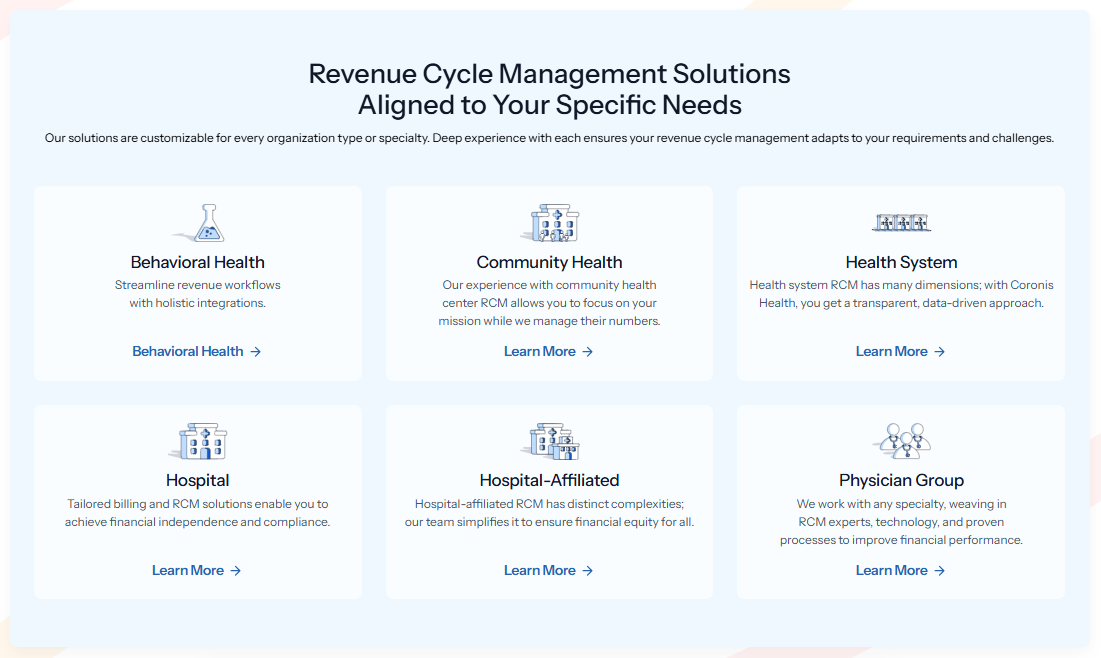
Coronis Health offers specialty-specific RCM services with deep expertise in niche areas like anesthesia, emergency medicine, cardiology, and pathology. Many organizations value their industry-focused insights and attention to unique billing nuances.
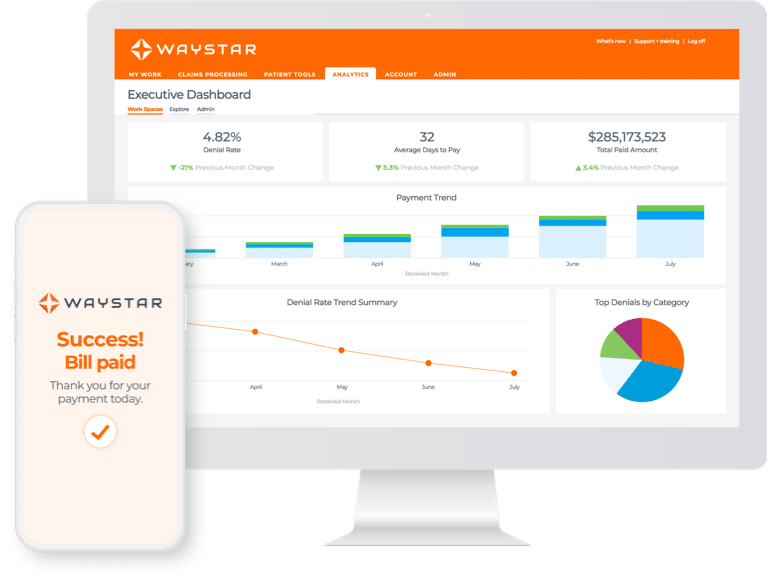
Waystar stands out as a technology-focused provider offering AI-powered automation and financial management solutions. Its platform highlights claim monitoring, payment management, and detailed analytics.
| Company | Strengths | Ideal For |
| Global Healthcare Resource | Builds custom, dedicated teams for each client and does not subcontract any work | Organizations seeking a flexible, customized partnership with dedicated expert teams |
| Ensemble Health Partners | A hands-on partnership model focused on operational efficiency and analytics | Hospitals and large health systems focused on improving financial performance |
| R1 RCM | An end-to-end, technology-first approach powered by AI and automation | Large health systems seeking a complete technology and service overhaul |
| Coronis Health | Deep billing and coding expertise tailored to specific medical specialties | Specialty medical practices needing deep expertise in niche billing |
| Waystar | A single, unified software platform to manage the entire revenue cycle | Organizations wanting to empower their in-house teams with a modern software solution |
Methodology for Selecting Top RCM Companies
To determine today’s leading RCM partners, the team evaluated entities based on:
- Service scope: Companies that offer end-to-end solutions, including medical coding, billing, and risk adjustment
- Industry expertise: Knowledge of medical specialty-specific requirements
- Scalability and customization: The provider’s ability to tailor services to the unique needs of different healthcare organizations
- Technology and integration: Approach to technology, whether it offers proprietary platforms or integrates with a client’s existing systems
- Compliance: Strong data protection and compliance with industry regulations
Key Features to Look for in an RCM Partner
When looking for an RCM partner, consider these features:
- Comprehensive service offerings: Look for a partner that covers the whole revenue cycle, so your team only has to deal with one vendor.
- Expert teams: Skilled coders, billers, auditors, and analysts ensure accuracy and faster turnaround.
- Data security and compliance: Your partner should follow strict HIPAA standards and use solid data protection practices to safeguard patient information.
Streamlining the Revenue Cycle
As RCM technology advances, healthcare organizations embracing automation and expert partnerships can better manage their revenue and improve operational efficiency. Selecting the right RCM partner is a strategic move that builds a more sustainable revenue cycle.